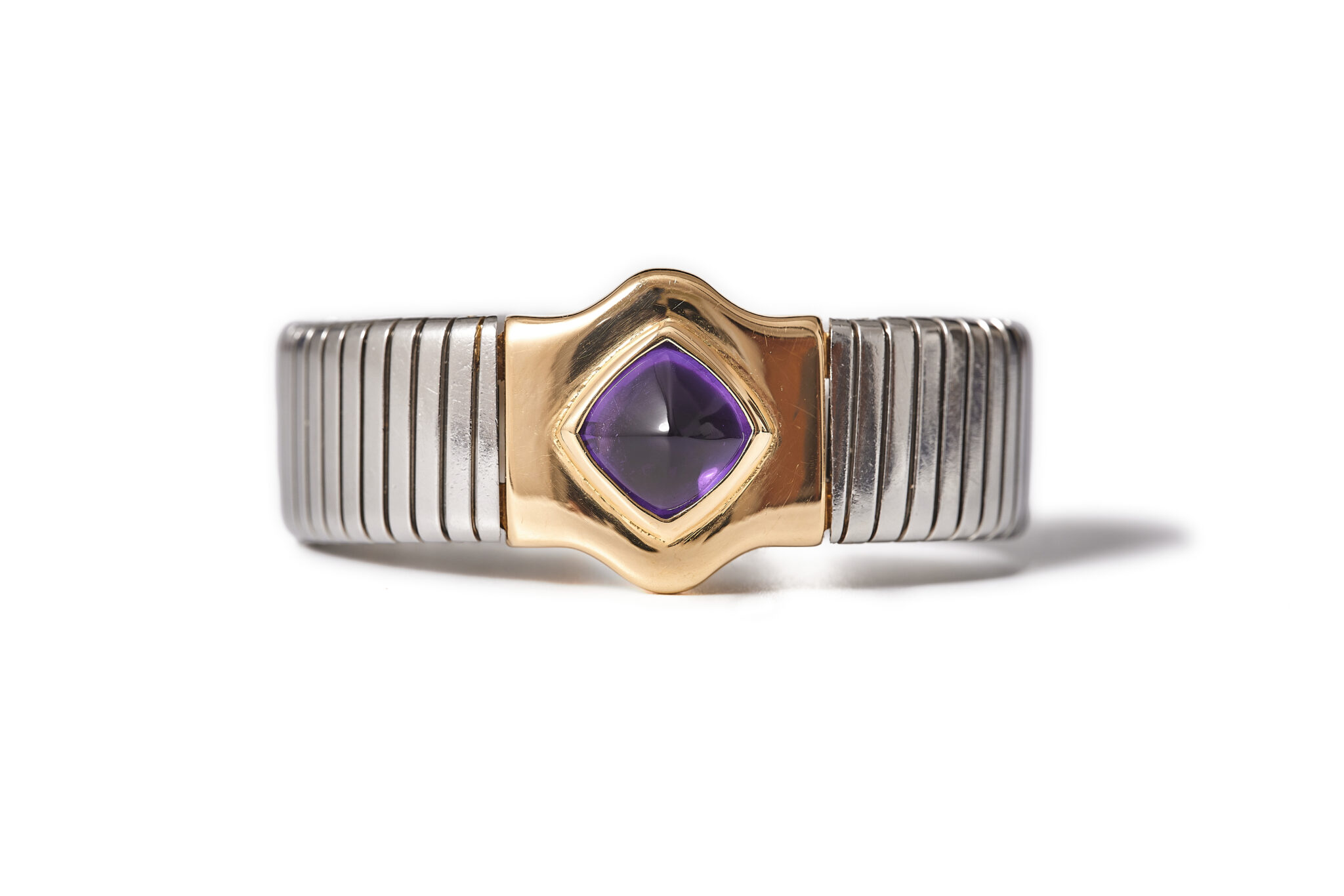
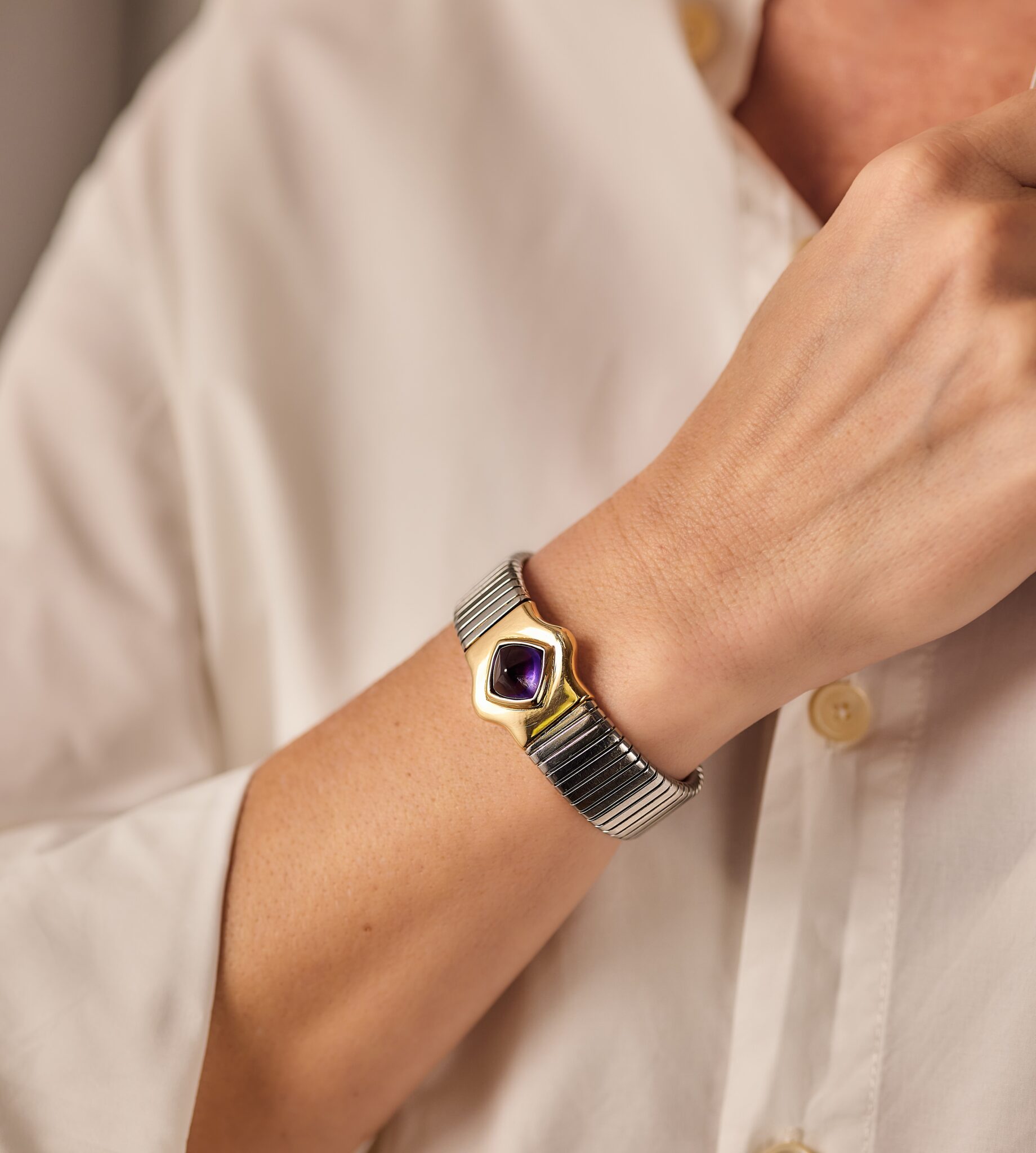
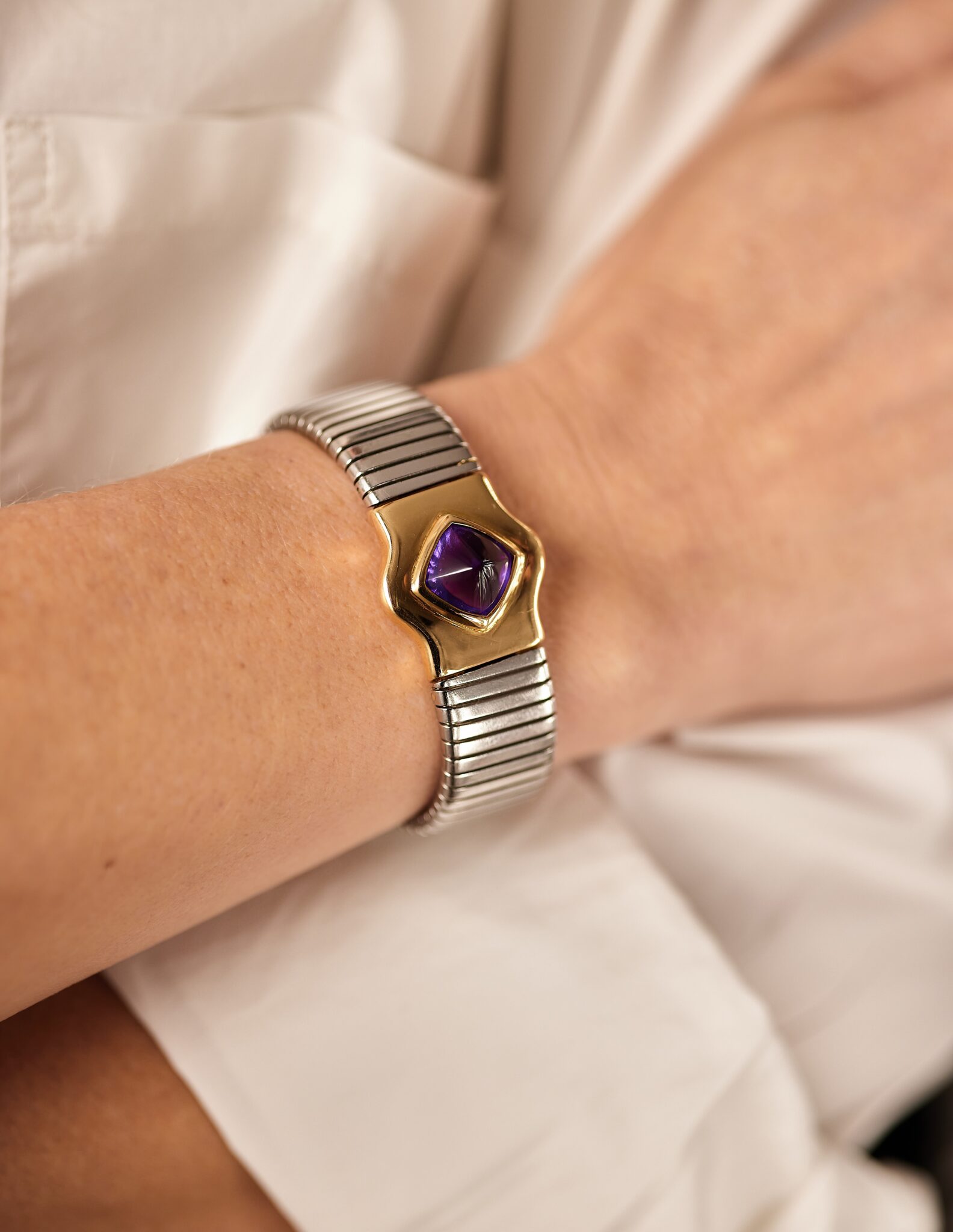
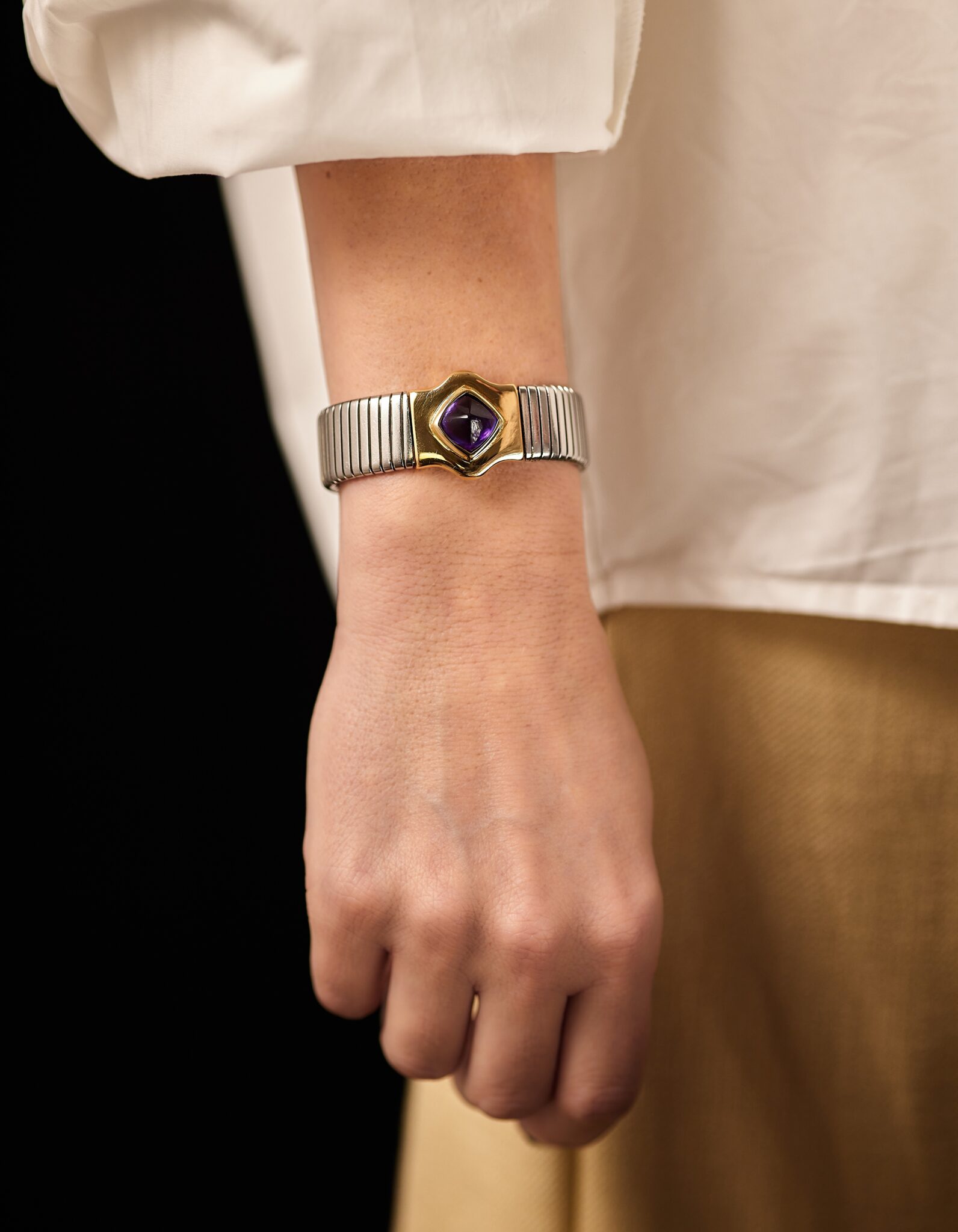
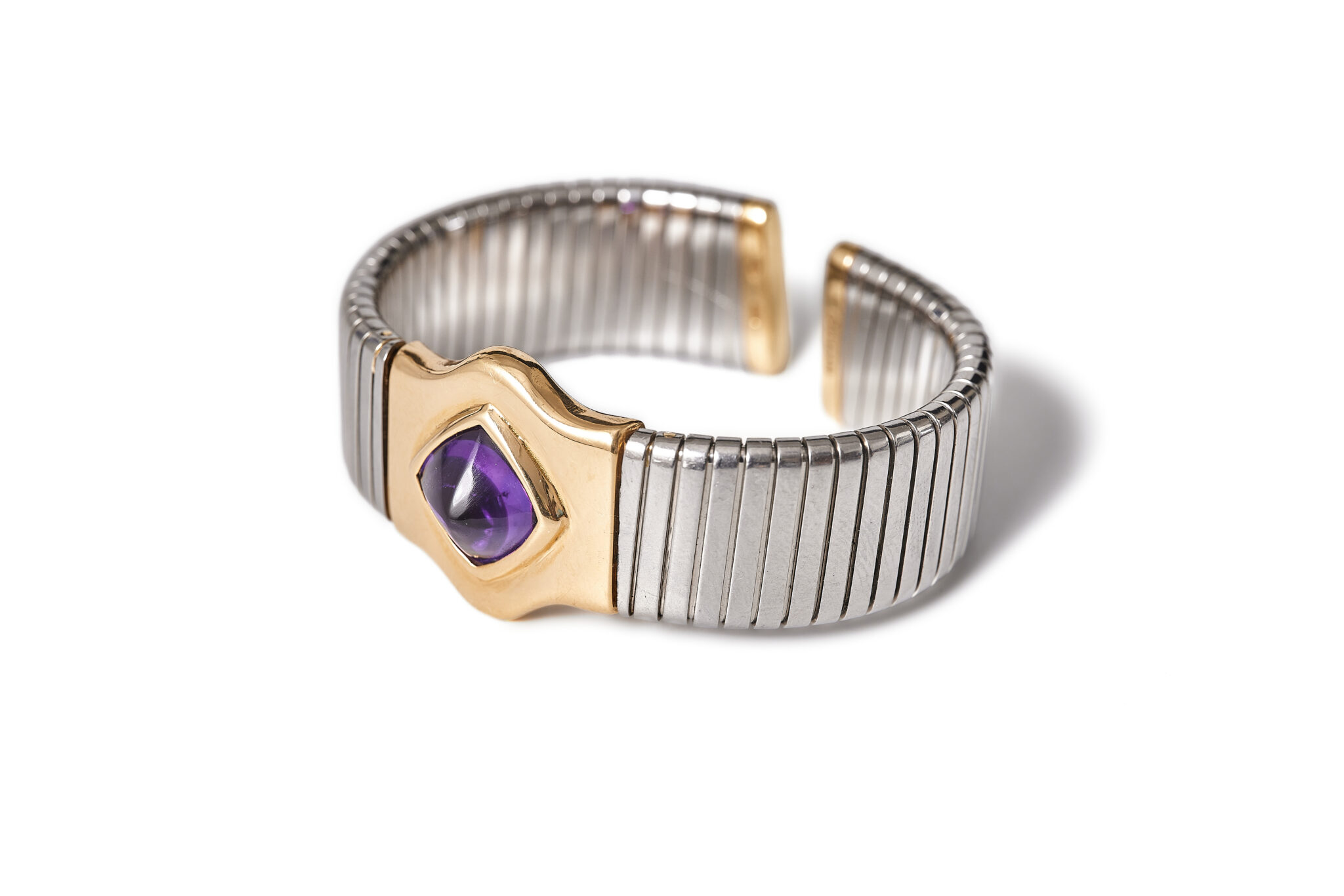
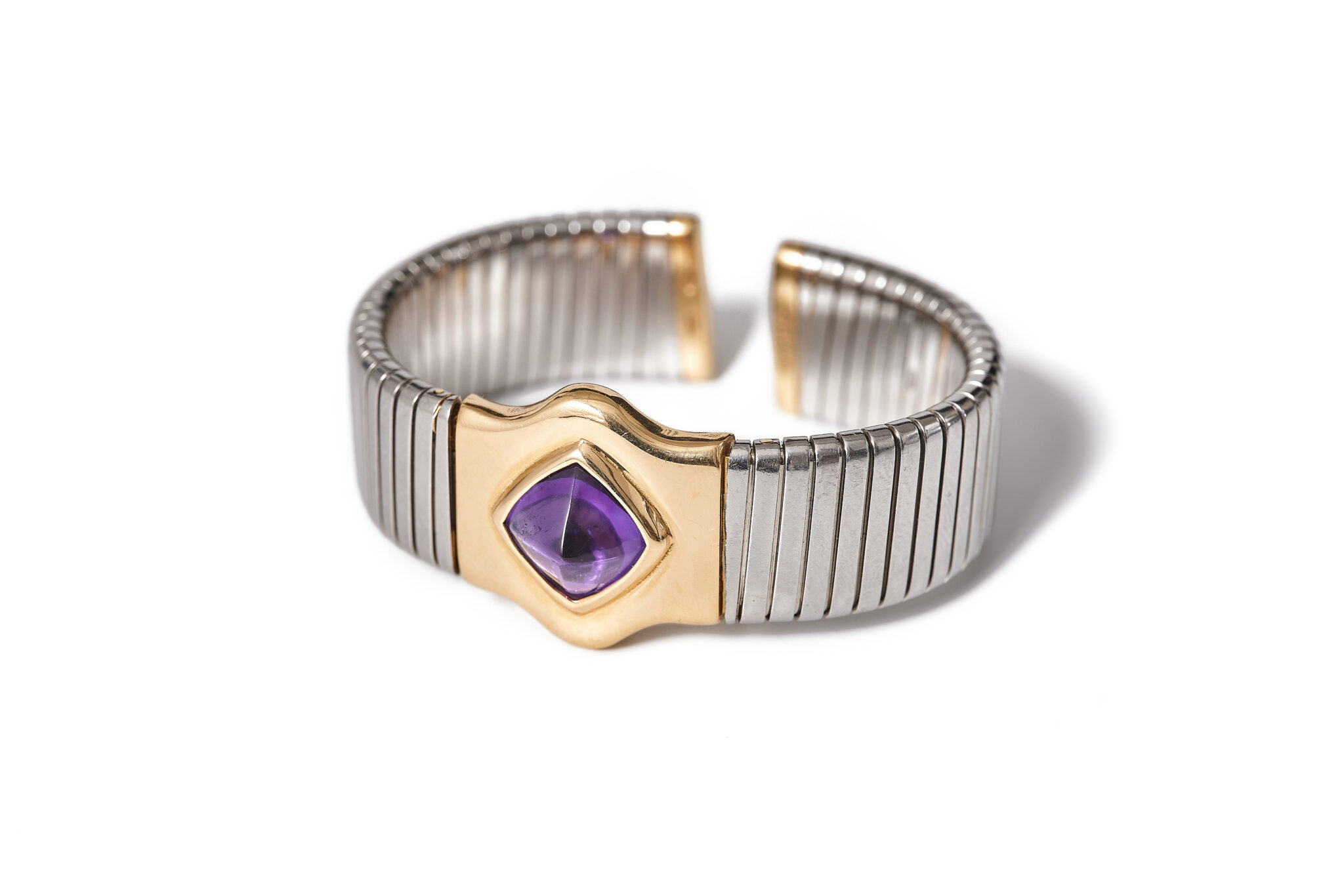
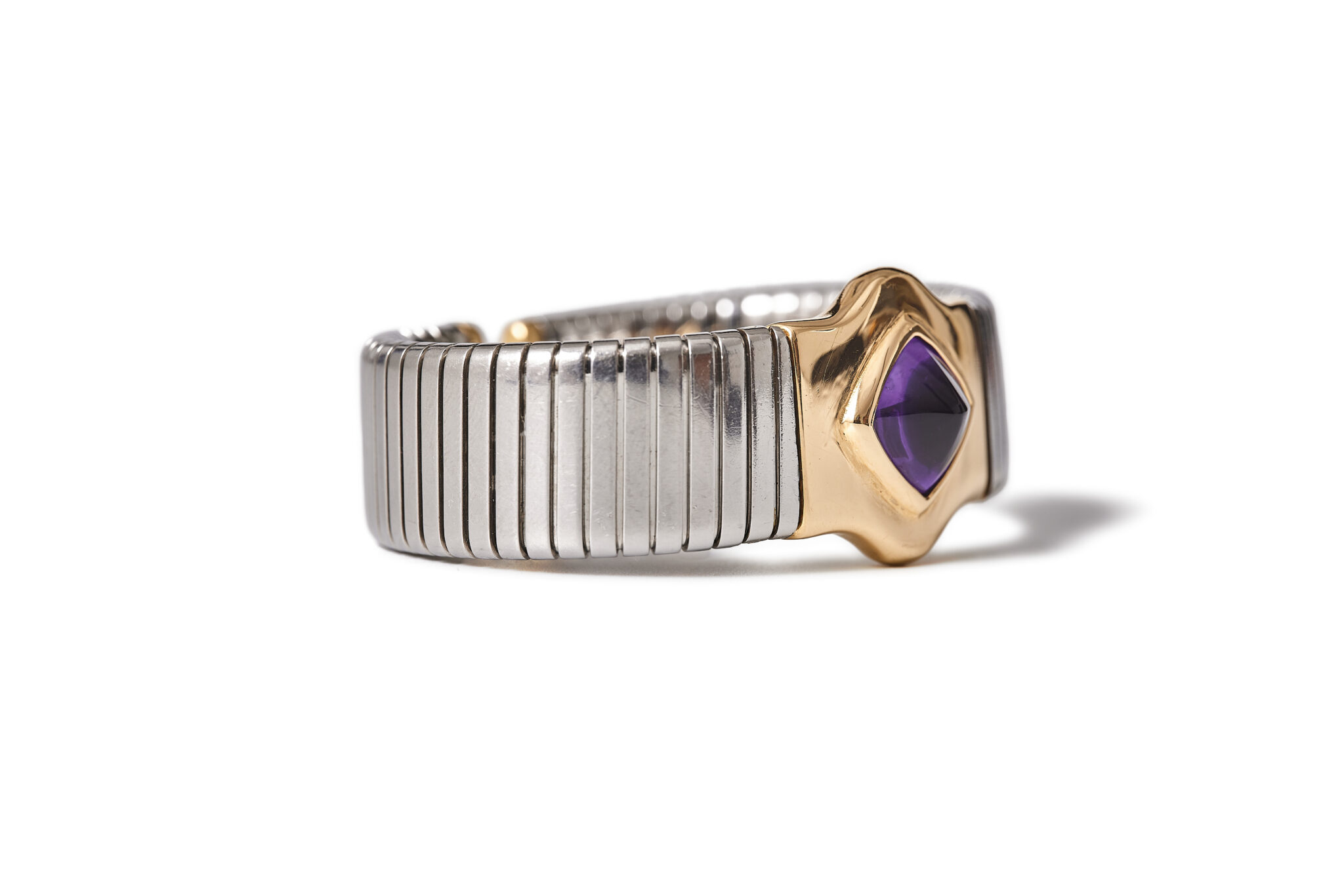
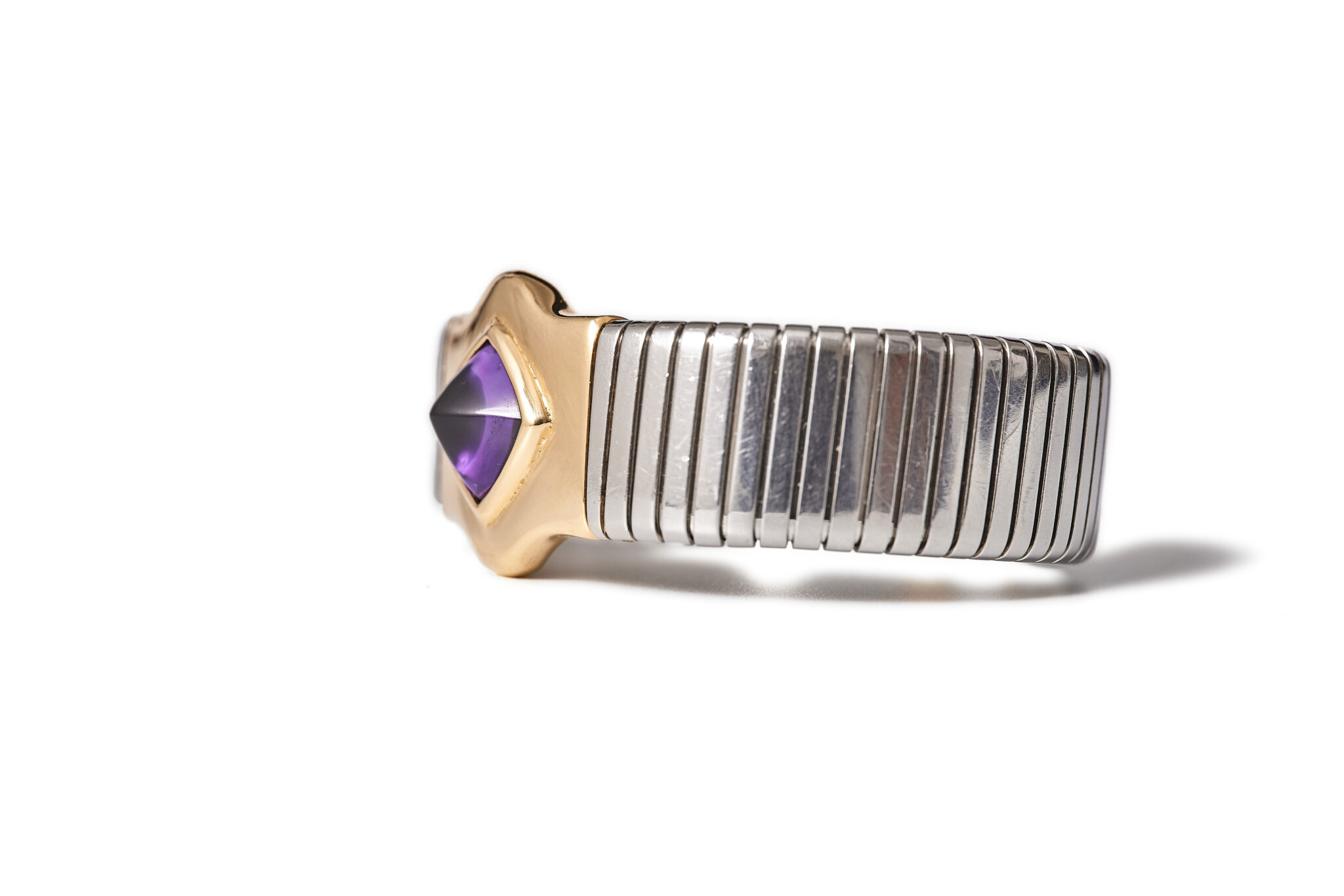
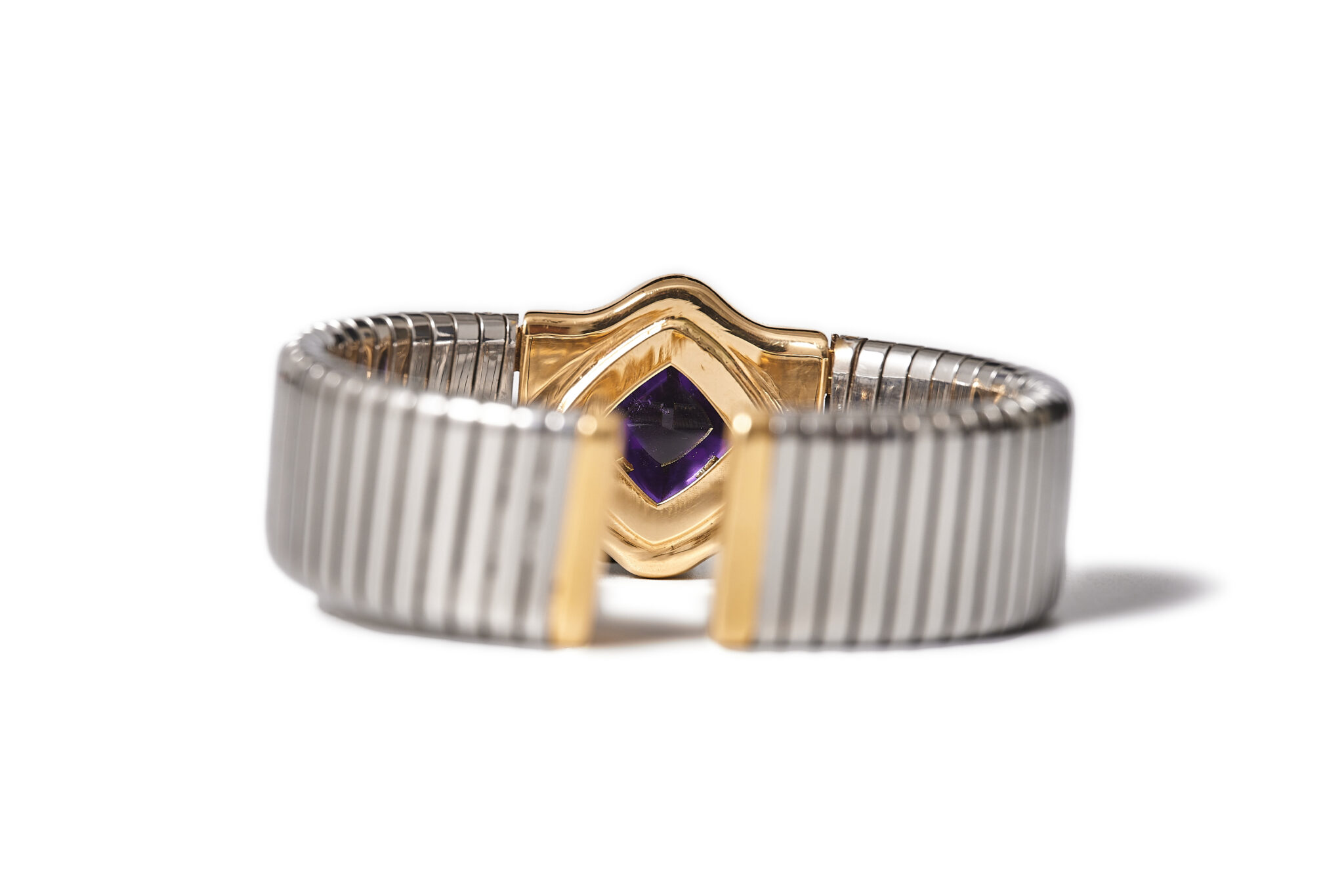
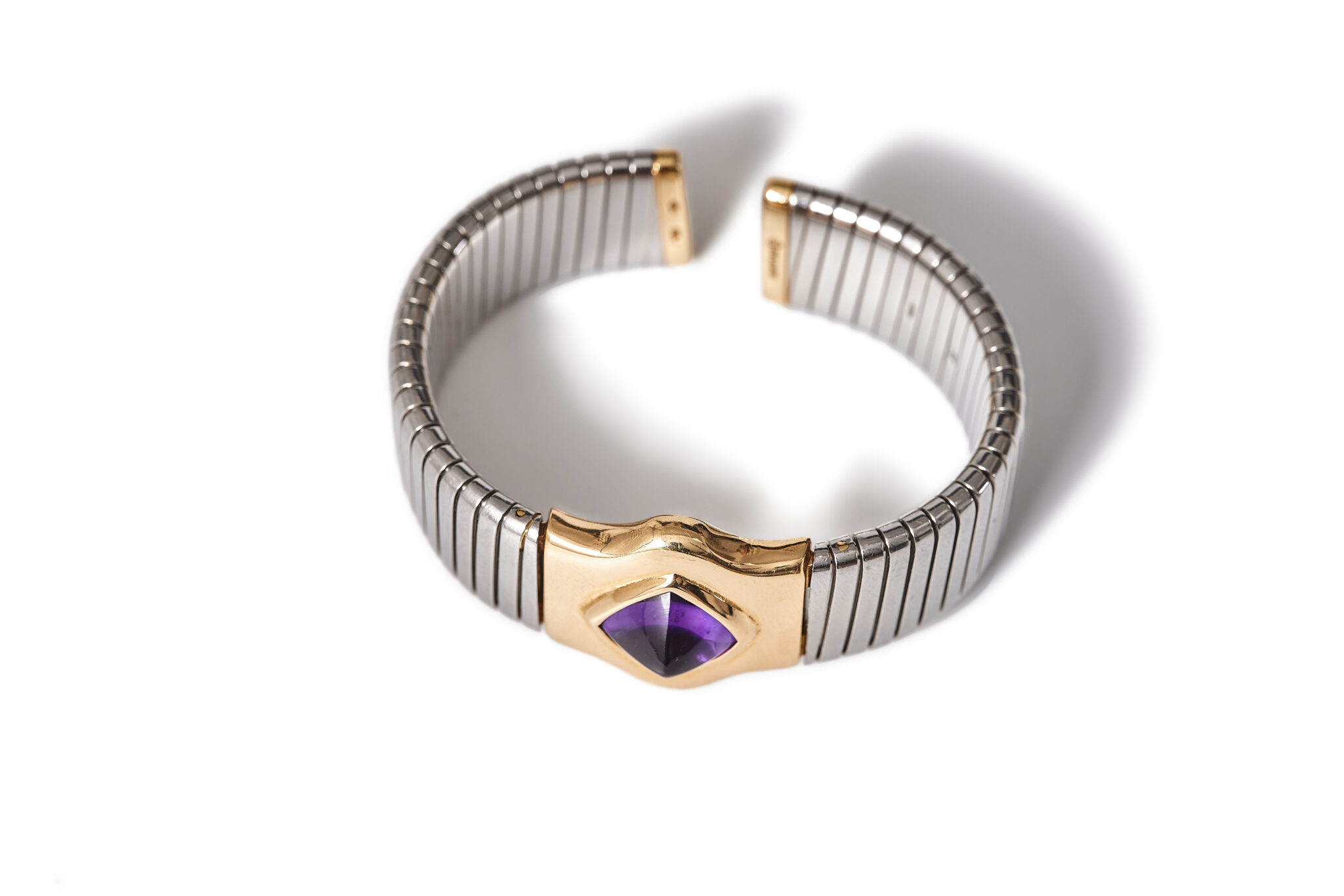
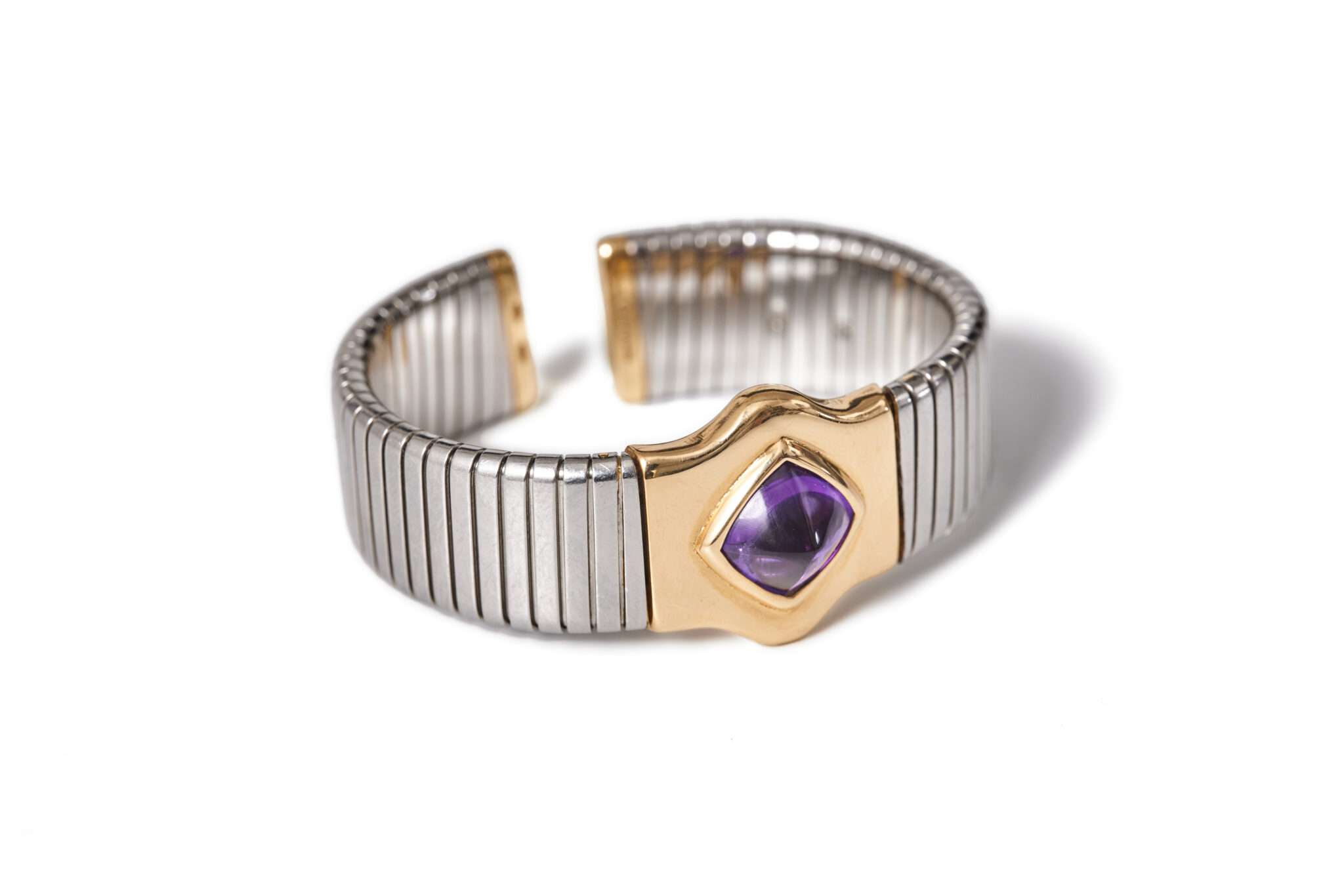
Graphic, innovative, rare and distinctly Bvlgari! Bigger than you think, but just as cool as expected.
The sugarloaf amethyst measures 10.4×10.4mm, 7,8mm and is estimated to weigh approx. 4ct.
The bangle has an inner circumference of 16,5/17cm it is approx. 16.5mm wide, the top 23,5 wide.
Gross weight 51,7grams.
A sugarloaf-cut gives the gemstone a sculptural presence. Its high, domed cabochon emphasizes depth of color over brilliance, allowing the amethyst saturated color to read as a continuous, velvety field of light. The cut softens inclusions and enhances the stone’s natural character, creating a sense of quiet power and architectural volume.
The play of metals of contrasting colors is characteristic ingredient of Bulgari Jewels. The desire to maximize the use of metals of contrasting colors brought Bulgari, in the late 1970s, also to use grey steel in combination with yellow gold. This involved a lengthy process of technological research which led Bulgari to select a type of steel which for its properties is normally employed in diverse spheres such as motor, aeronautical, naval, chemical and medical industries.
This particular type of steel was deemed suitable in color – complementing the warm hues of red and yellow gold; it is absolutely stainless and suitable for microfusion. The problems Bulgari had to face and solve in the working of steel were related to its high melting point (1300 – 1500 °C) and its low malleability, compared to 18 karat gold. The working of steel therefore is much more labor intensive than that of gold.
Bulgari’s unconventional approach to jewelry is thus confirmed. Just as the firm has dared to juxtapose the finest and most costly gems with much less precious stones – for sake of color effect – it has also combined the magic of gold with the utilitarian quality of steel in order to achieve a striking ornament.
Tubogas changed names almost as often as a snake changes its skin: “skeleton key”, “spirotube”, “gas pipe”, “Serpenti”. But it was the Second World War that sealed its destiny. The Tubogas was originally a corrugated tube made of articulated bands used to transport pressurized gas
Being one of the most characteristic and successful designs, the Tubogas in this case steel: a flexible band of sleek and polished contours produced without soldering, a powerful representation of skill. Its construction, which requires hours of skilled craftsmanship, consists of wrapping two long strips with raised edges around a core – either of copper or wood. The edges then interlock onto another, requiring no soldering. The flexibility of such a band is truly remarkable.