
Speaking of Cartier Pearls. The story that always first comes to mind is when in 1917, Pierre Cartier acquired the New York mansion that would become the flagship of Cartier on Fifth Avenue in an extraordinary exchange. The property belonged to Morton F. Plant, whose wife was captivated by a magnificent natural pearl necklace by Cartier. Rather than a conventional sale, the deal was sealed through a trade: the necklace—then valued at around $1 million—plus $100 in cash for the building at 653 Fifth Avenue.
The mansion remains Cartier’s New York home today, making the pearl necklace one of the most famous jewels ever exchanged for real estate.
Pearls have been revered for millennia as symbols of purity, wealth, and refinement. In antiquity and through the 19th century, natural pearls (perles fines) were among the most precious of all gemstones, rarer and more valuable even than diamonds. Formed organically within mollusks without any human intervention, their scarcity made them the ultimate adornment of royalty and high society. The advent of cultured pearls in the early 20th century transformed accessibility, but natural pearls retained their status as the most coveted and valuable.
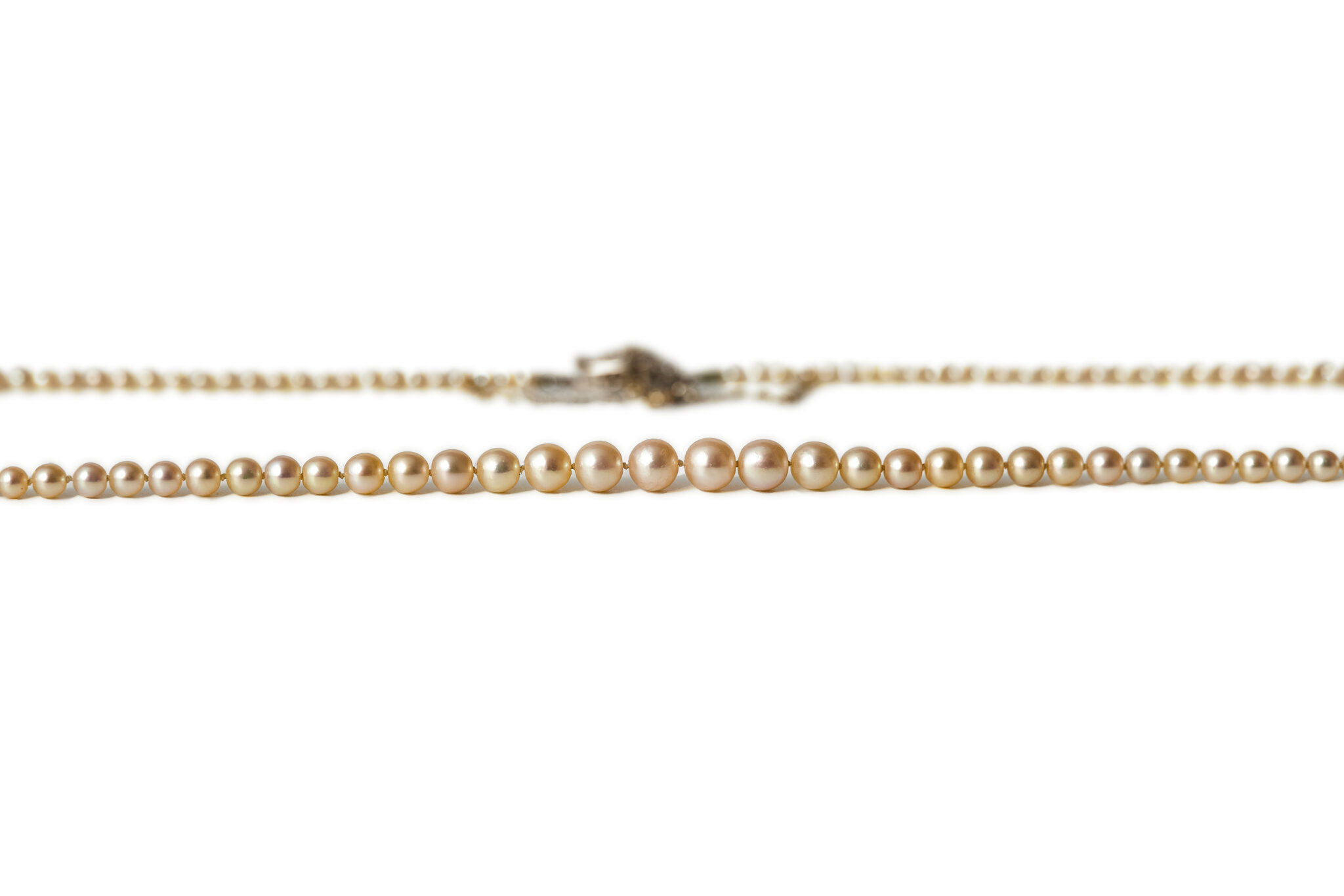
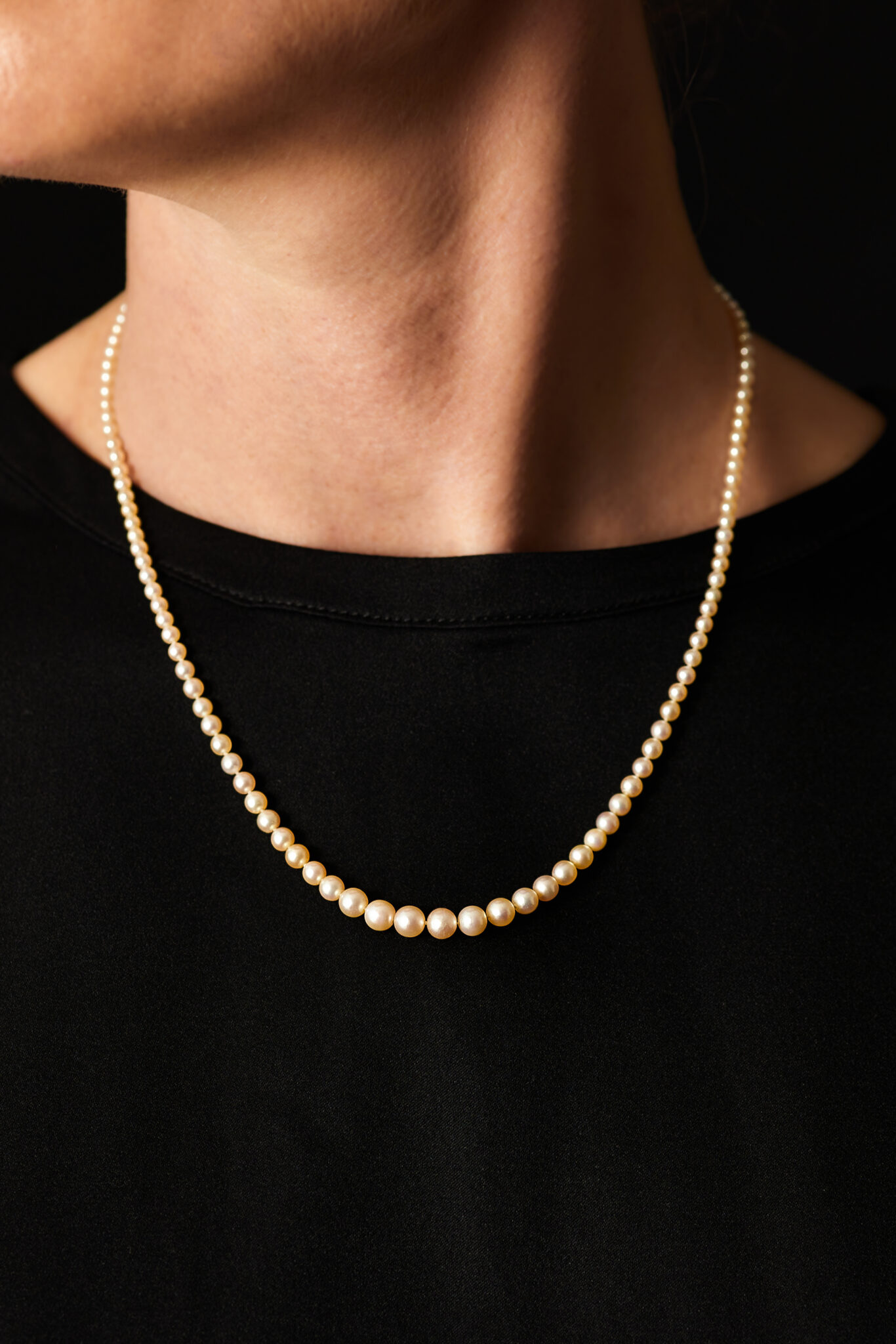
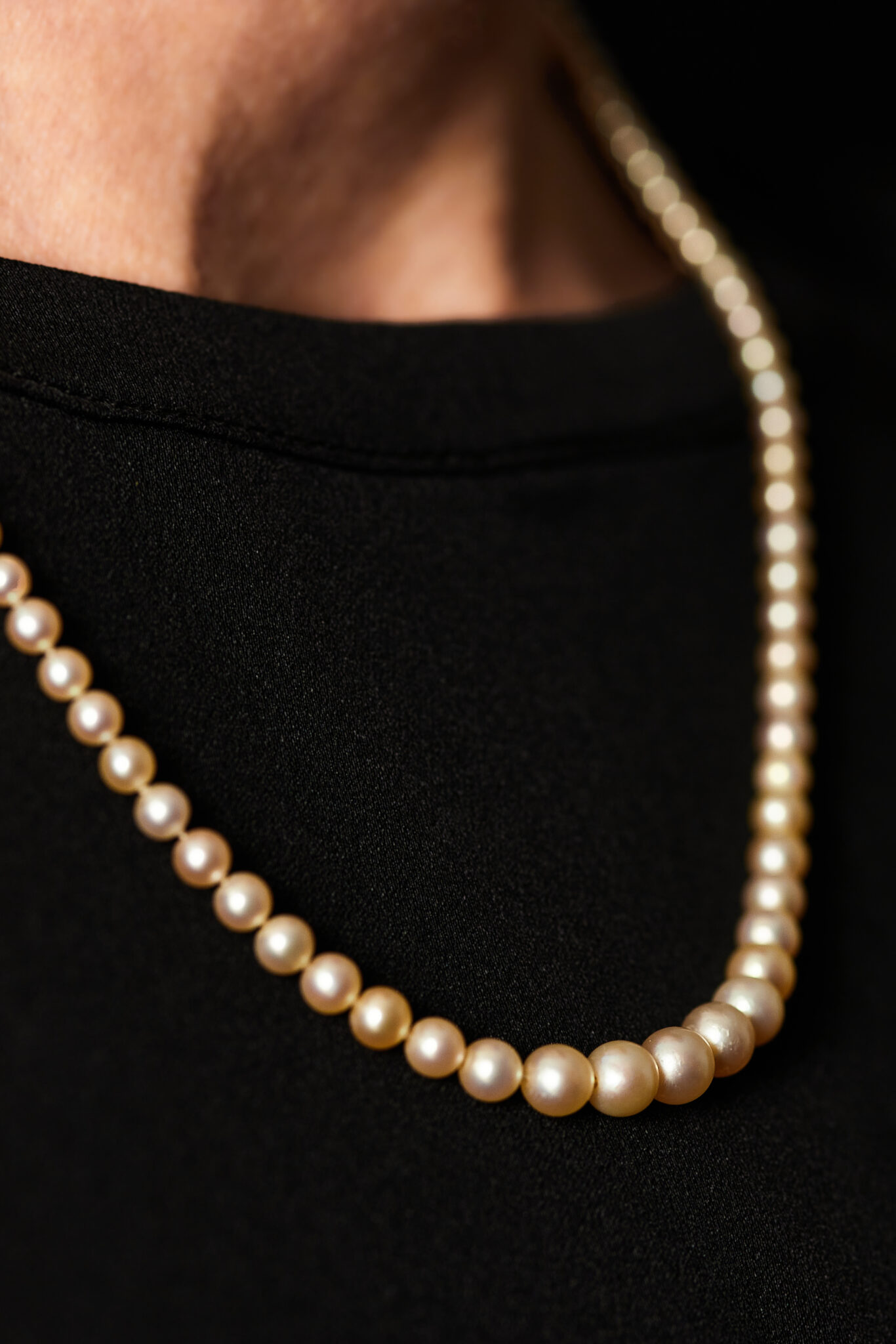
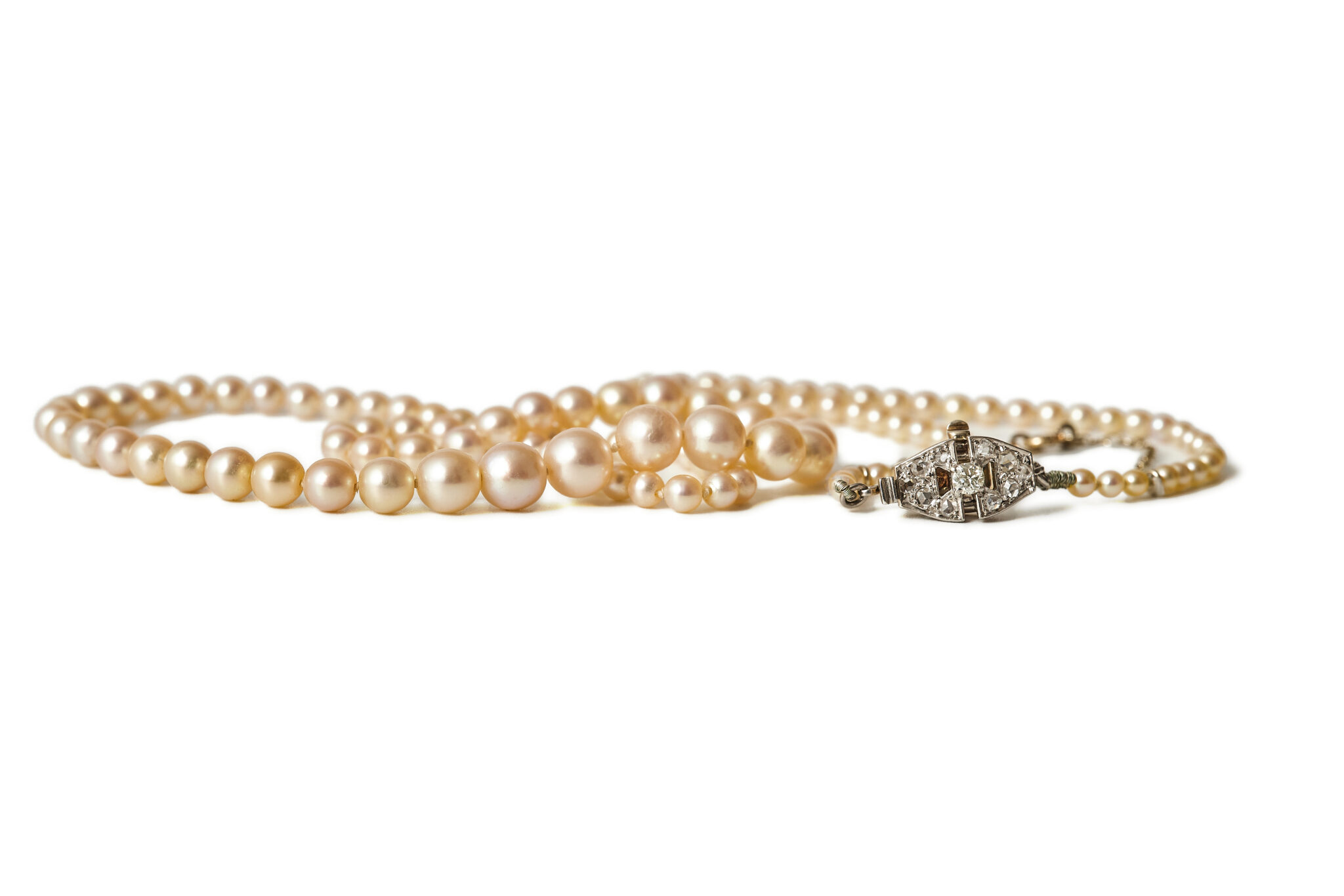
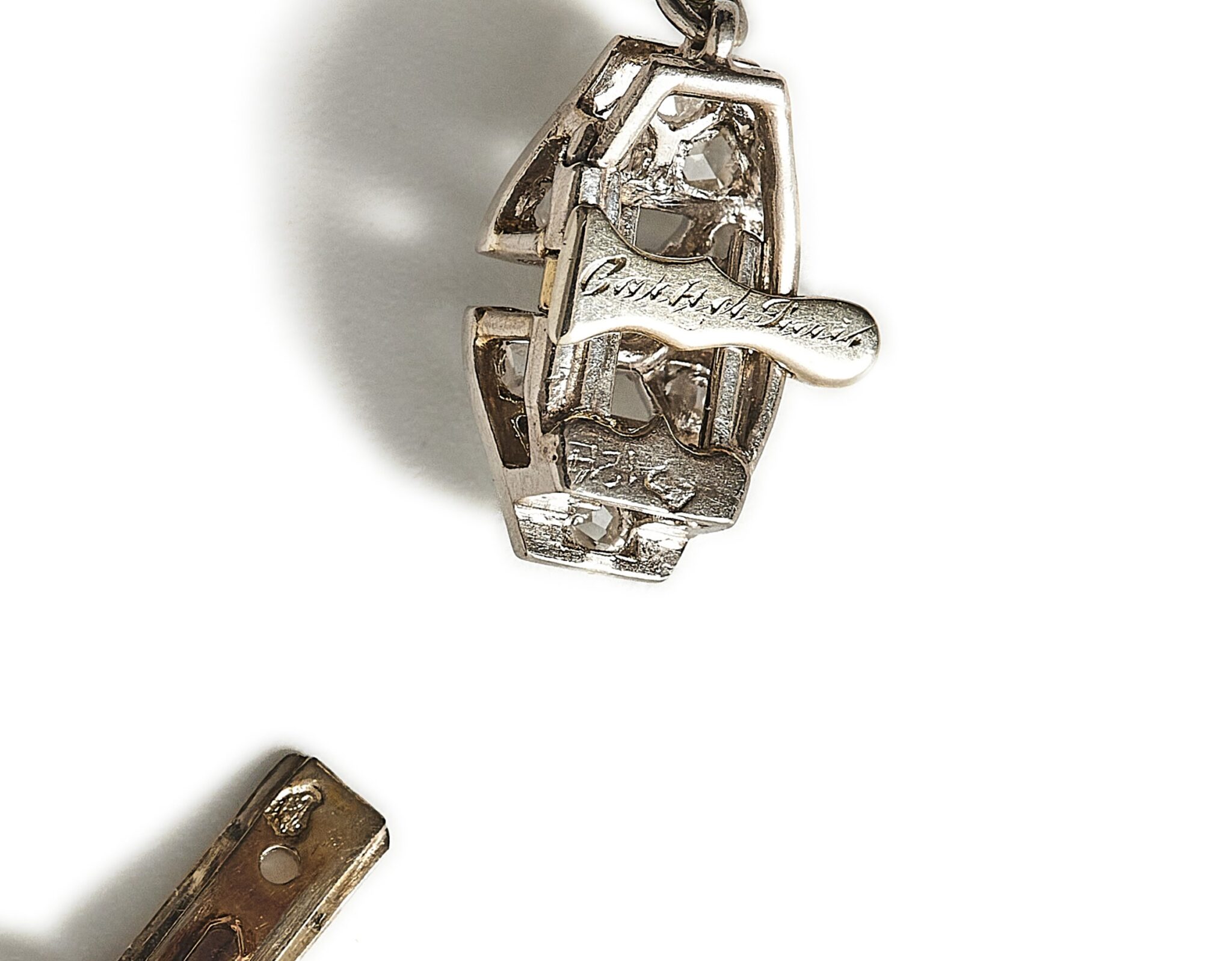
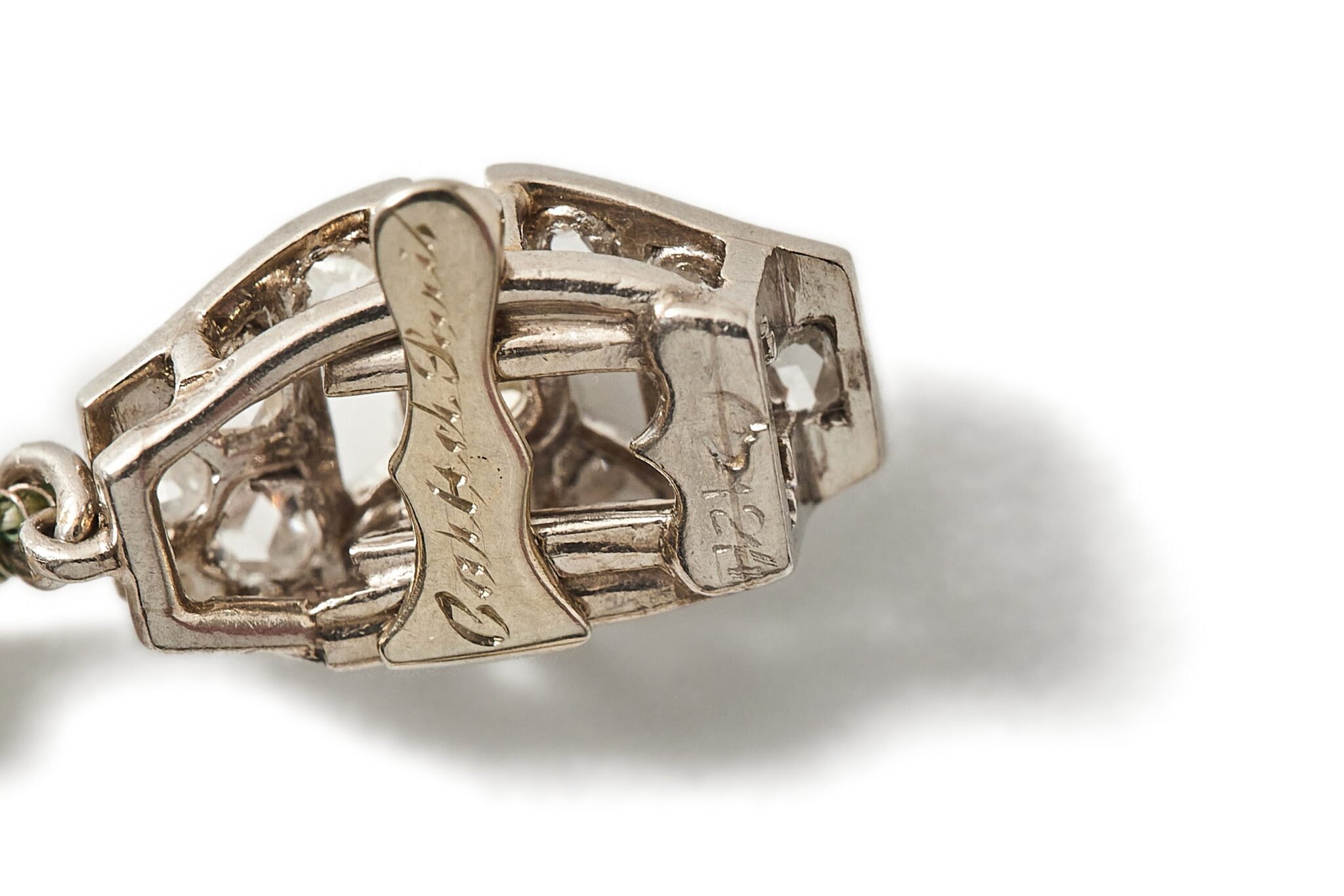
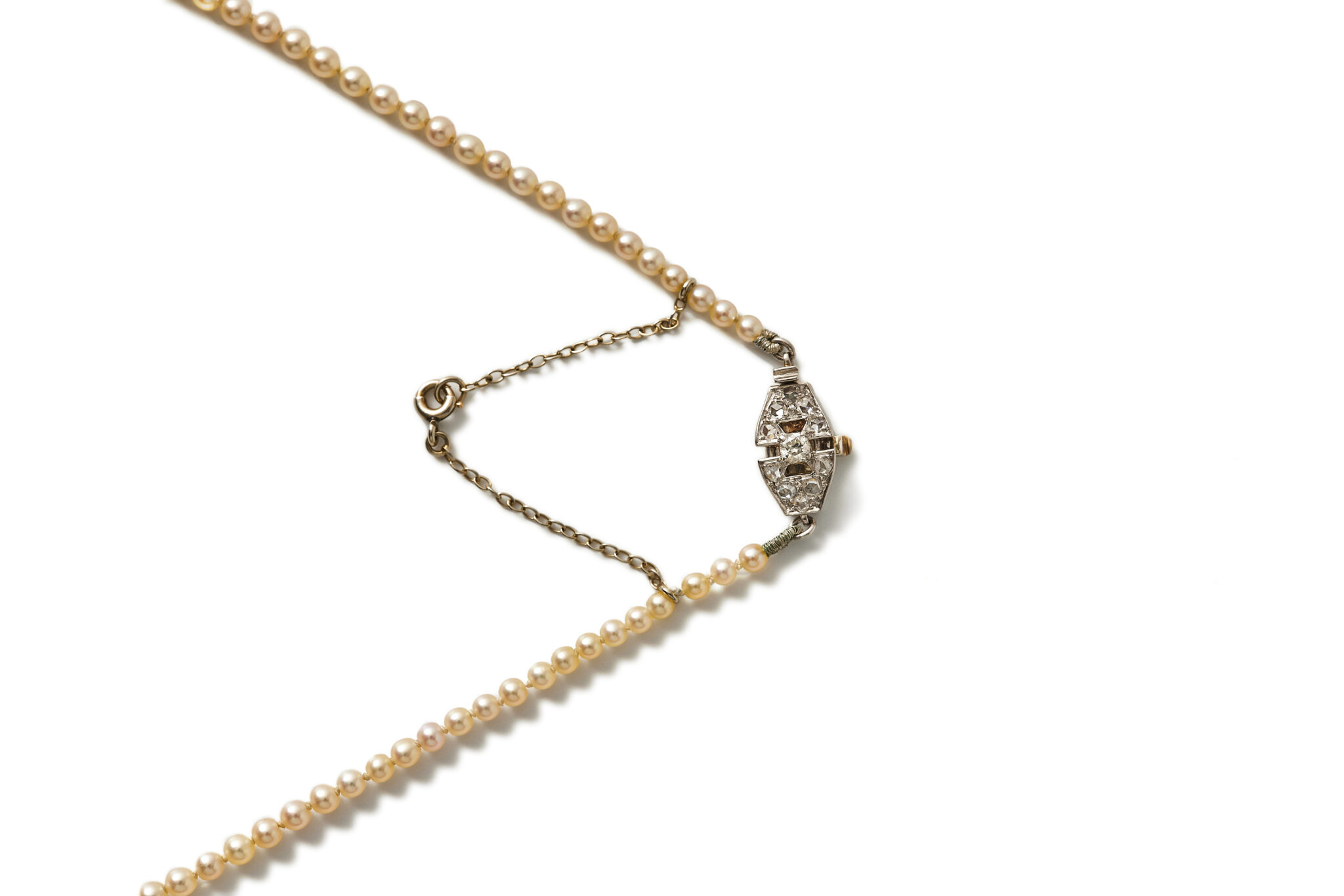
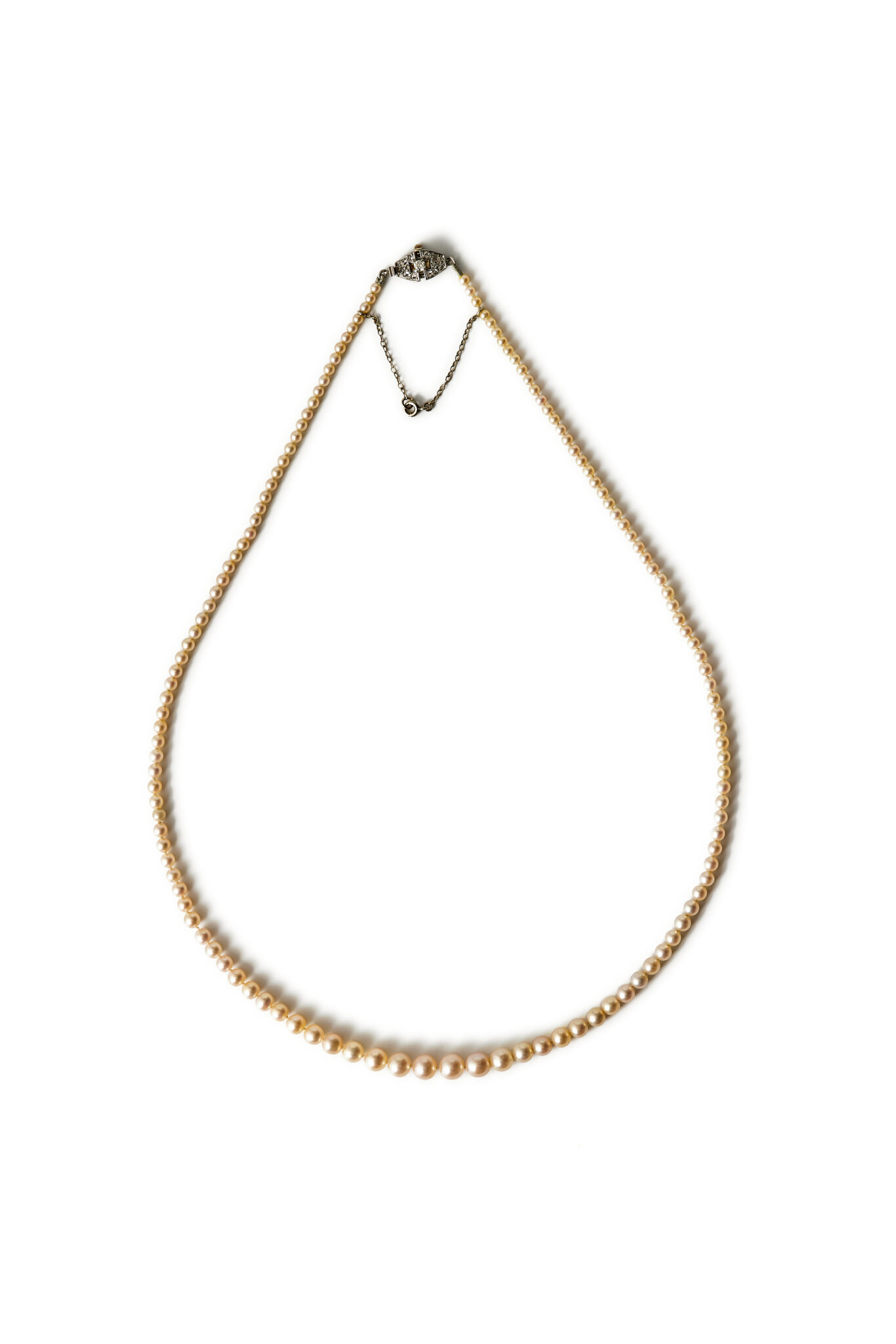
This elegant graduated necklace of natural pearls (perles fines), measuring approximately 2.3–5.3 mm in diameter and 45.5 cm in length, exemplifies that tradition of rarity and refinement. The pearls are strung with exceptional harmony and finished with a refined clasp set with an old brilliant-cut diamond, flanked by numerous rose-cut diamonds, mounted in platinum and 18K white gold. The clasp is signed Cartier, Paris, underscoring the maison’s unparalleled standards of craftsmanship and taste.
Founded in Paris in 1847, Cartier rose to prominence as the jeweler of kings and queens, celebrated for its elegance, innovation, and technical excellence. In the early 20th century, Cartier played a decisive role in shaping modern pearl jewelry, particularly during the Edwardian and Art Deco periods. The house favored natural pearls of exceptional luster and proportion, often pairing them with restrained diamond settings that enhanced, rather than overshadowed, their beauty. Cartier’s pearl necklaces became icons of sophistication, worn by aristocracy, collectors, and style leaders across Europe and America.
Accompanying this necklace is an original certificate of authenticity issued by the Paris Chamber of Commerce, dated March 1951, confirming the pearls as natural. The survival of the two original seals that once secured the strand further enhances the necklace’s rarity and historical integrity.
Also an certificate from the German gemlab DSEF in Idar-Oberstein dated March 2026 stating that the pearls are natural saltwater pearls.
Together, the pearls, diamonds, documentation, and Cartier signature form a jewel of exceptional cultural and material significance—an enduring expression of timeless elegance and one of the finest traditions in high jewelry.