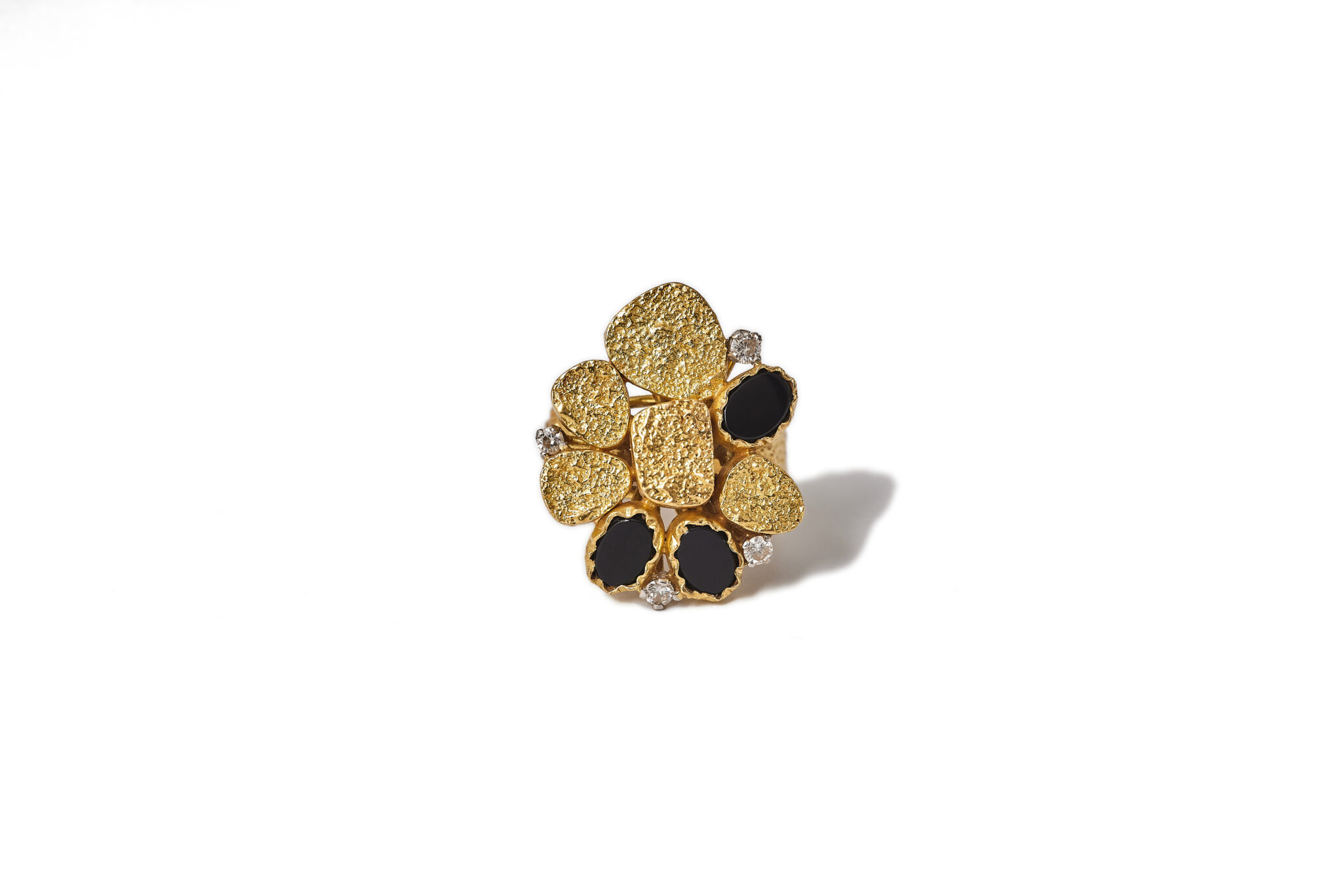
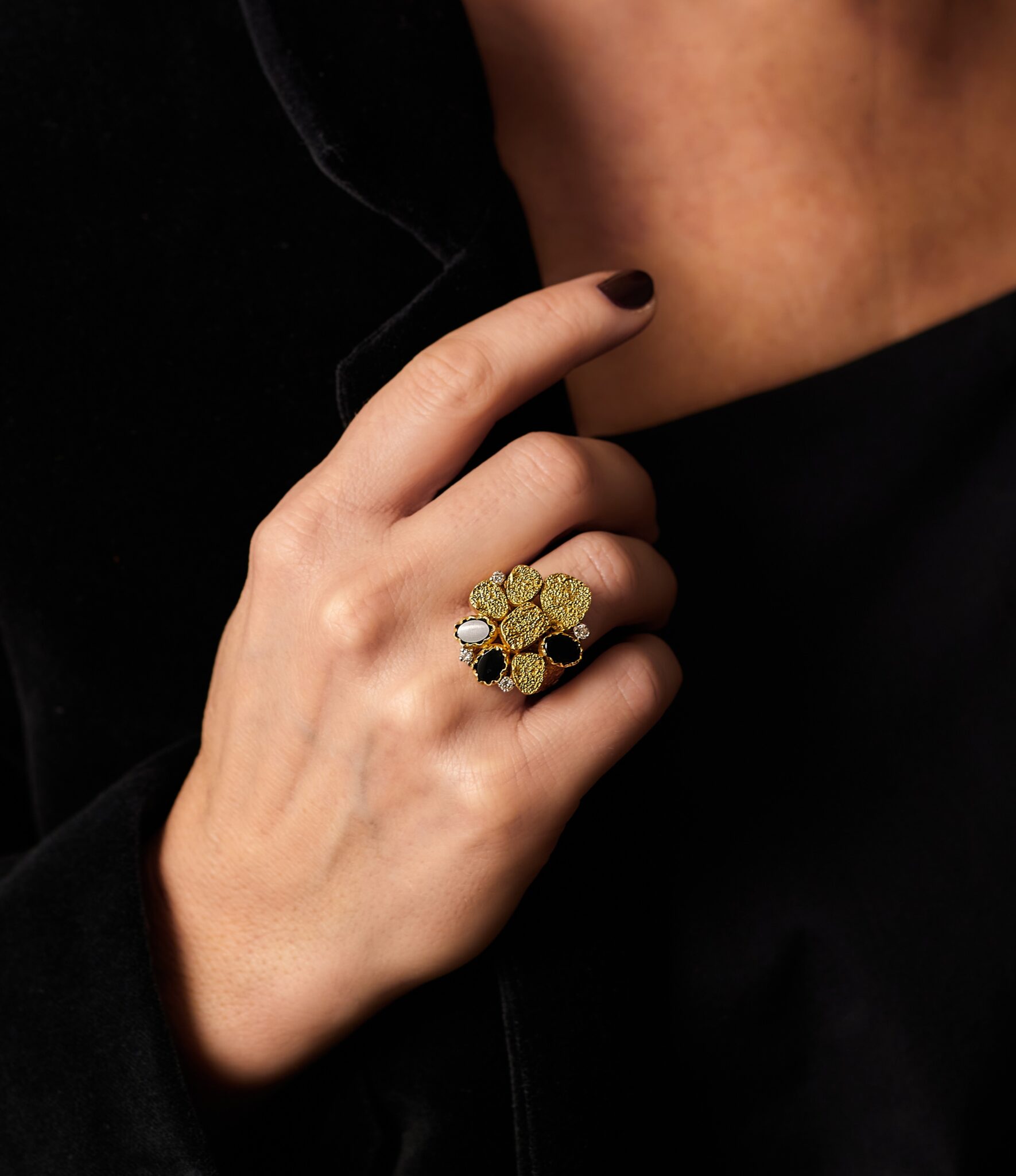
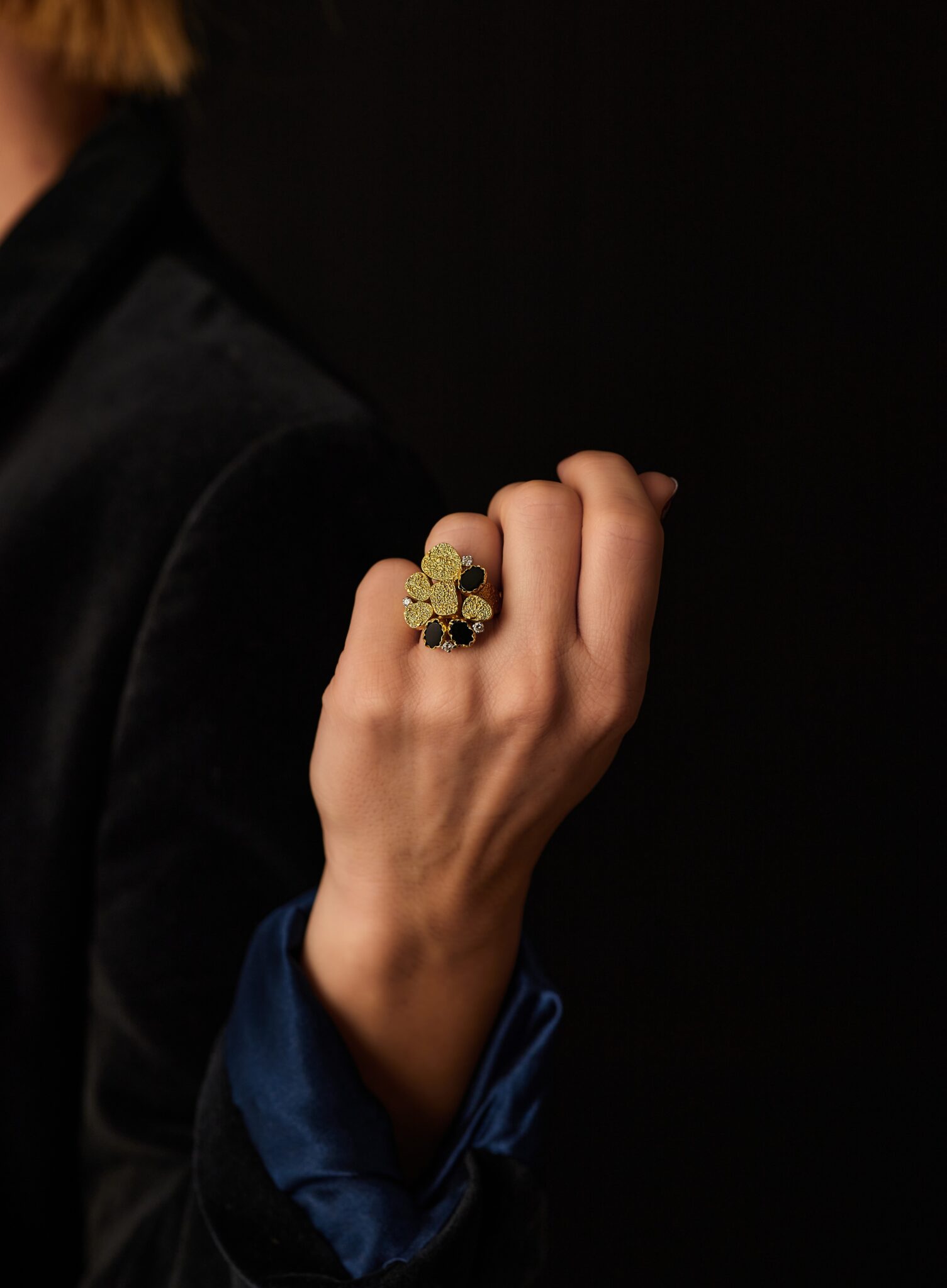
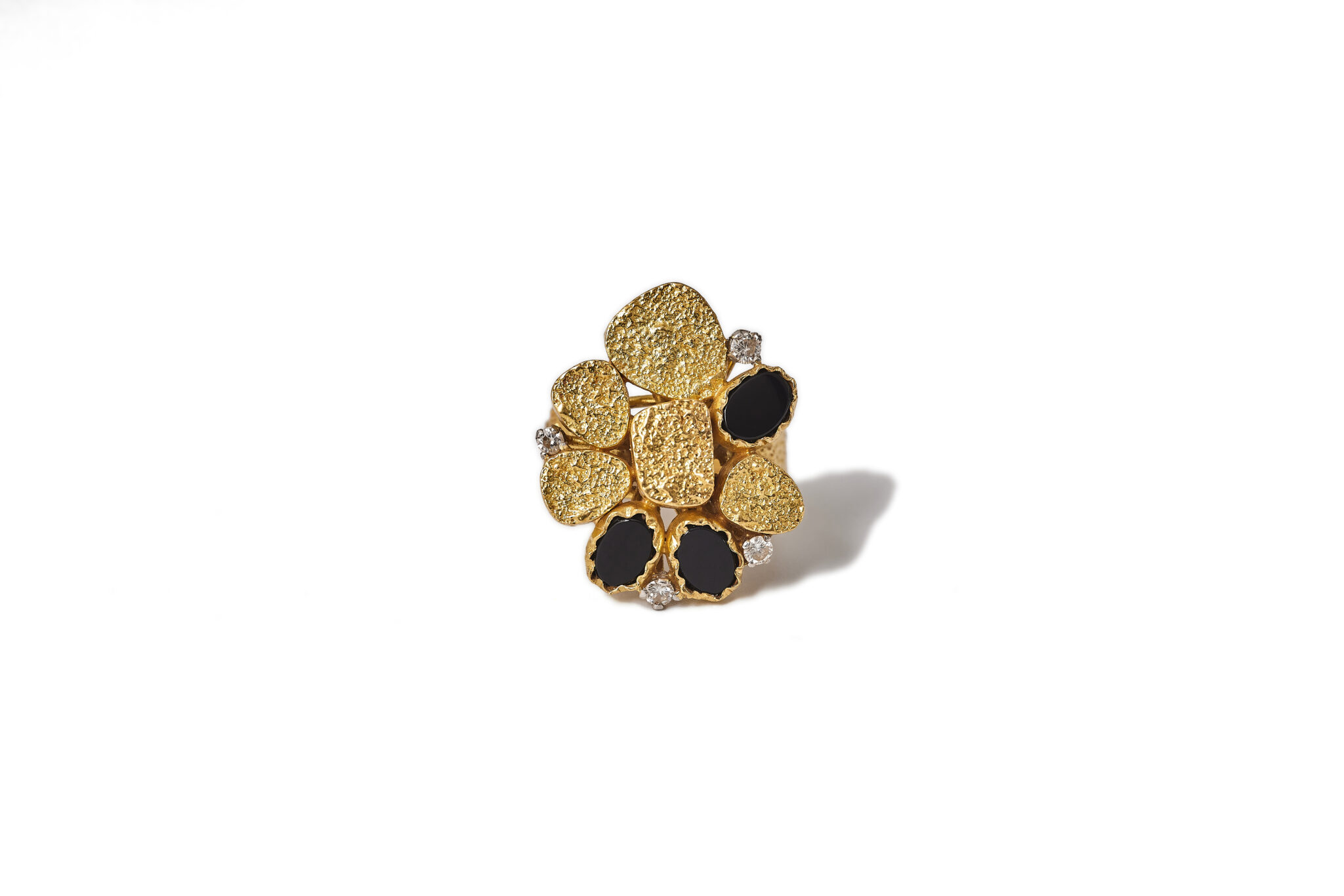
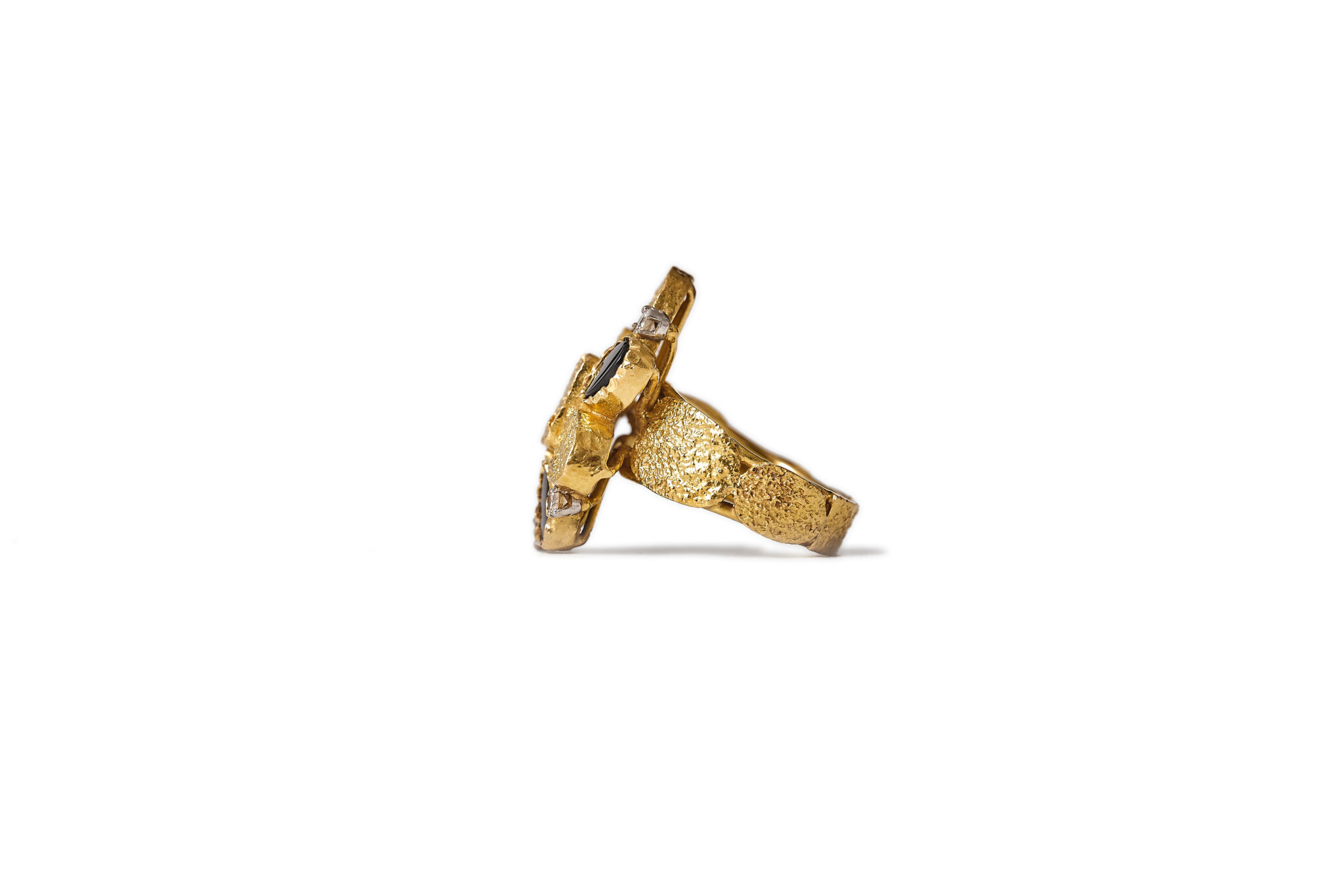
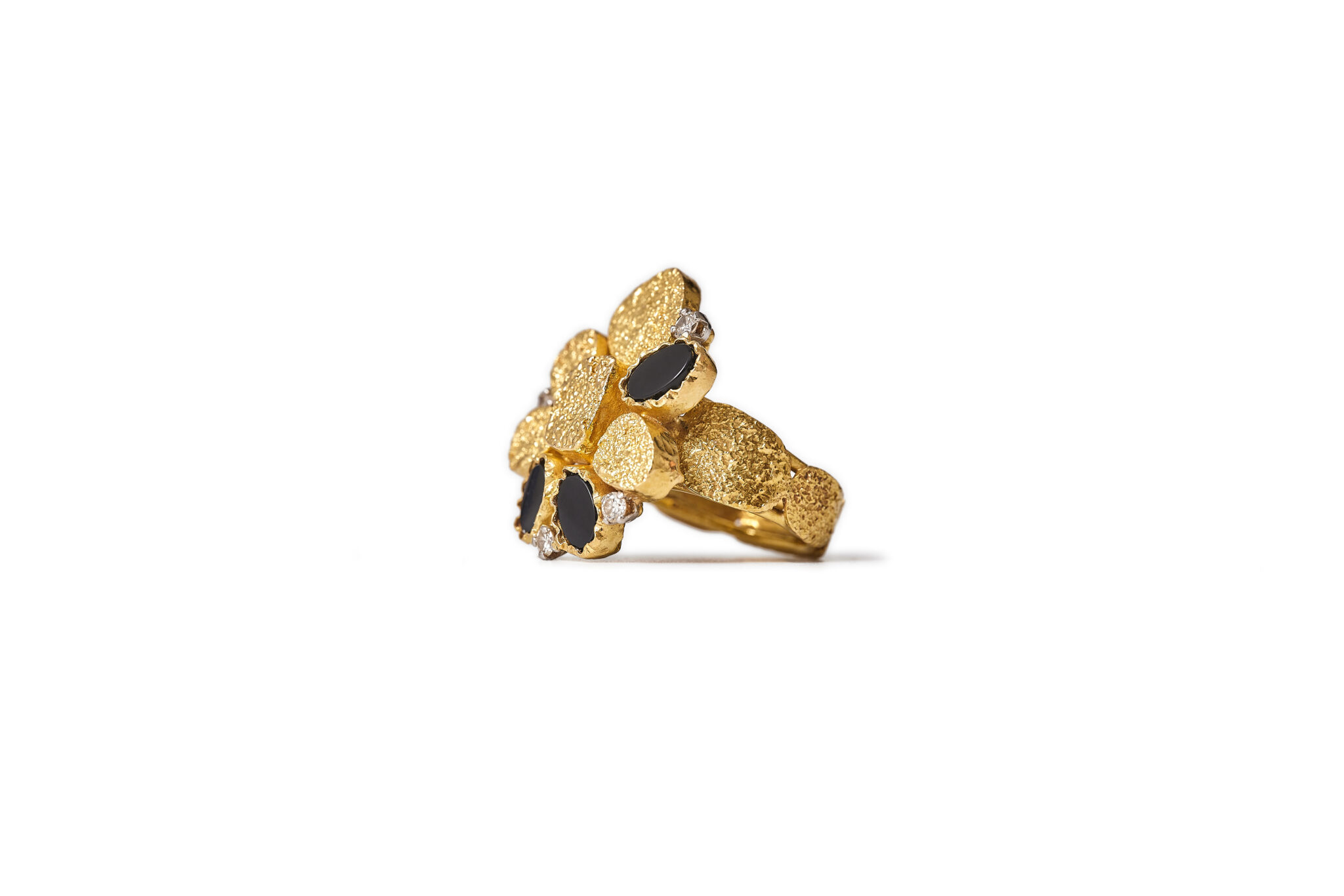
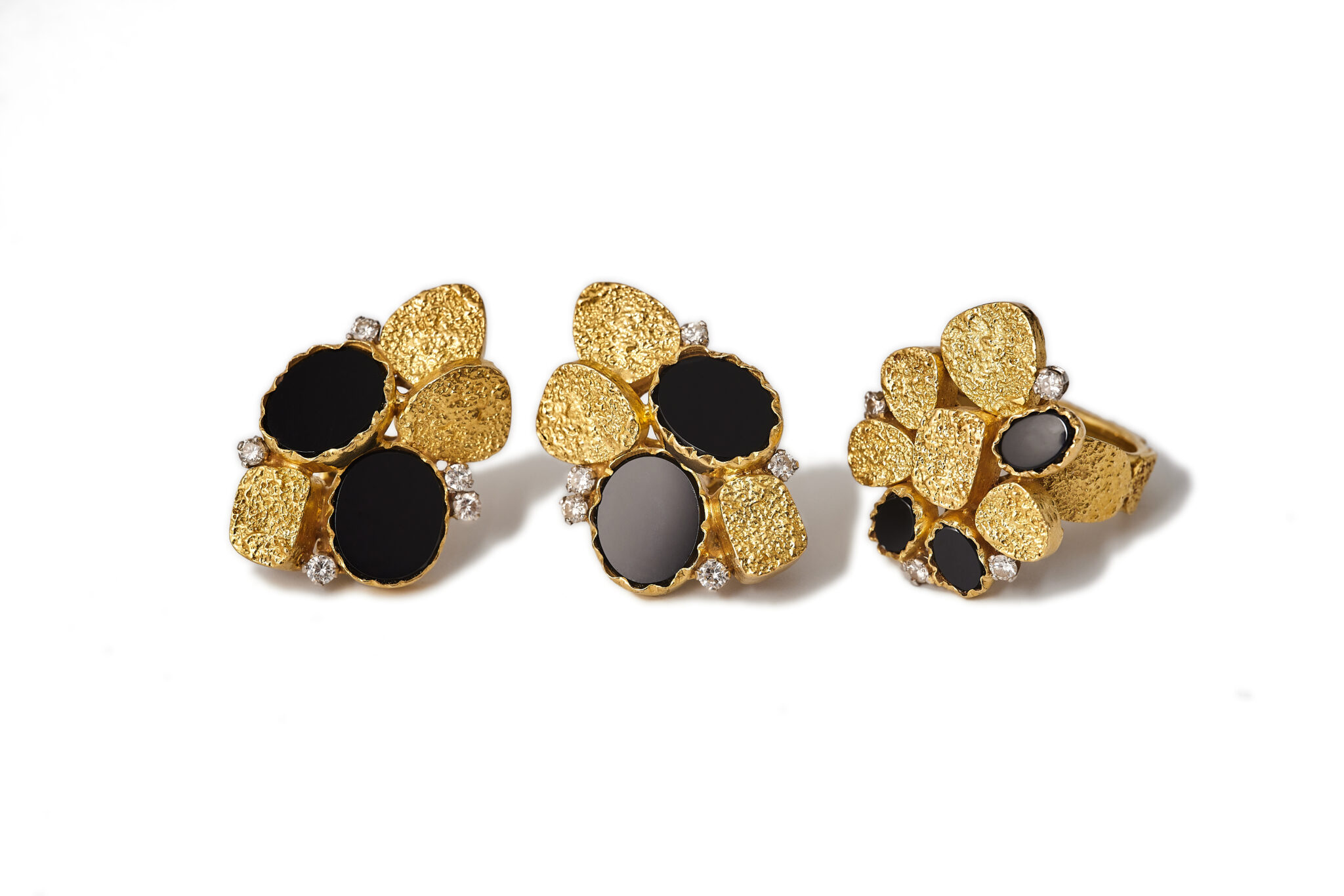
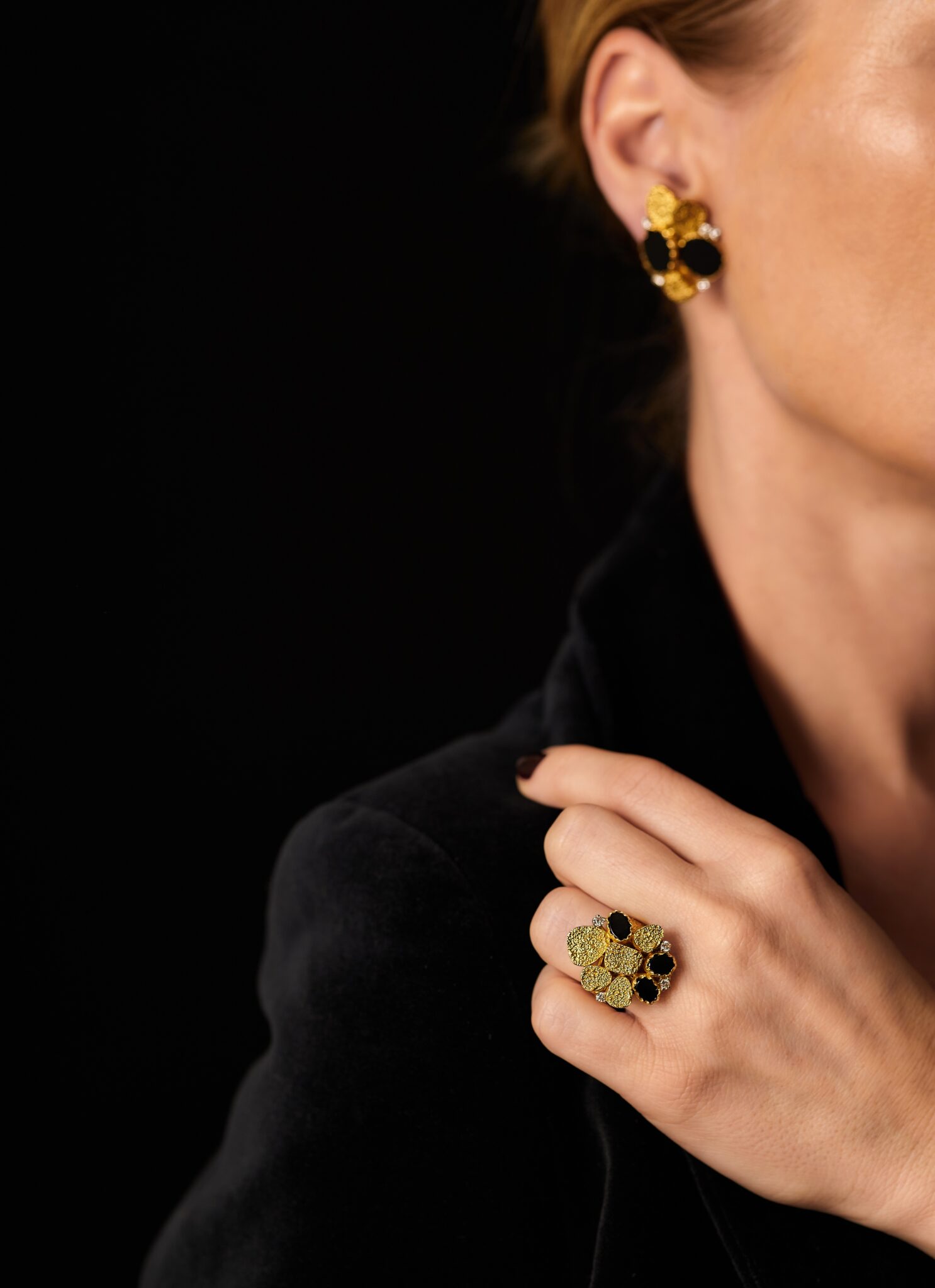
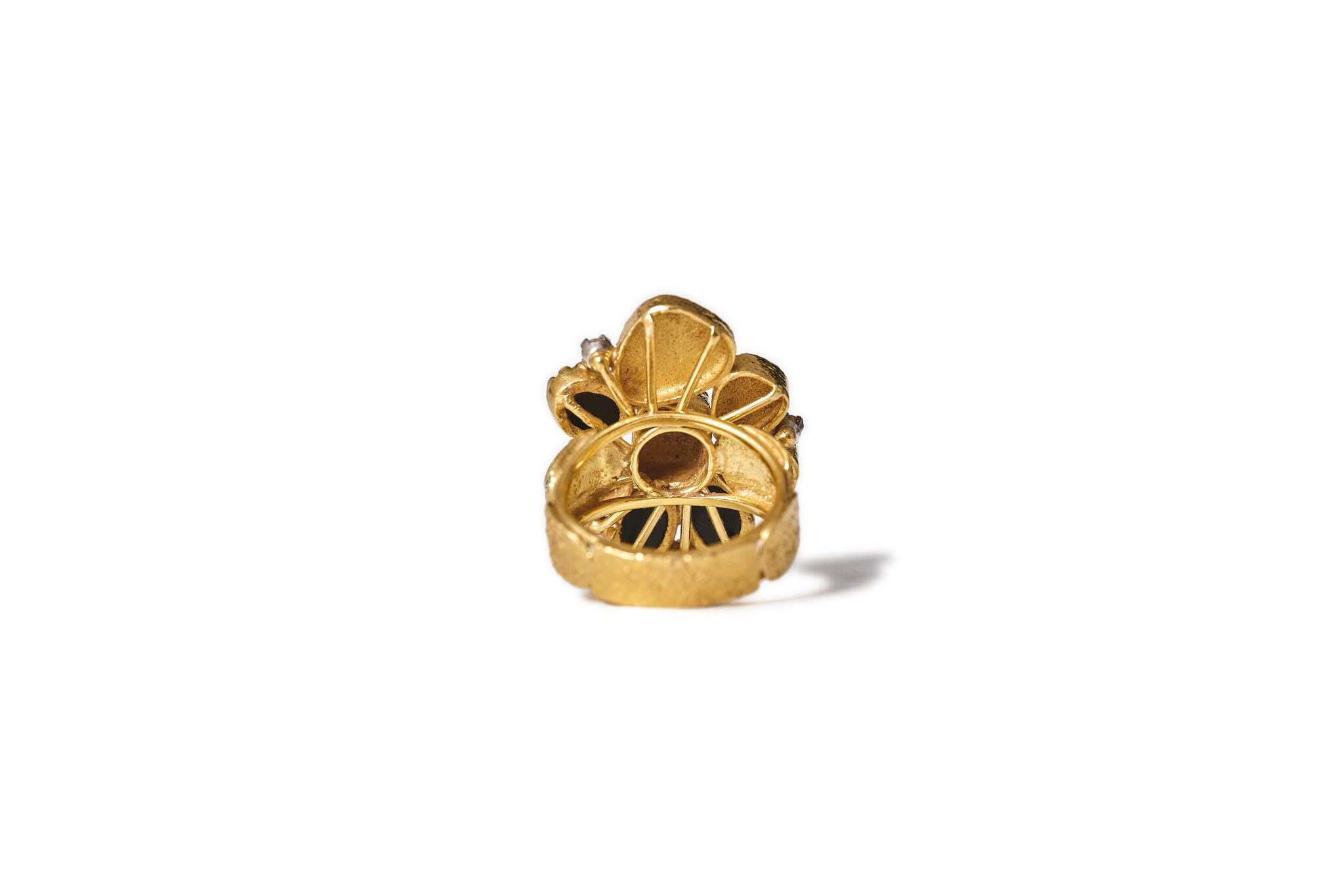
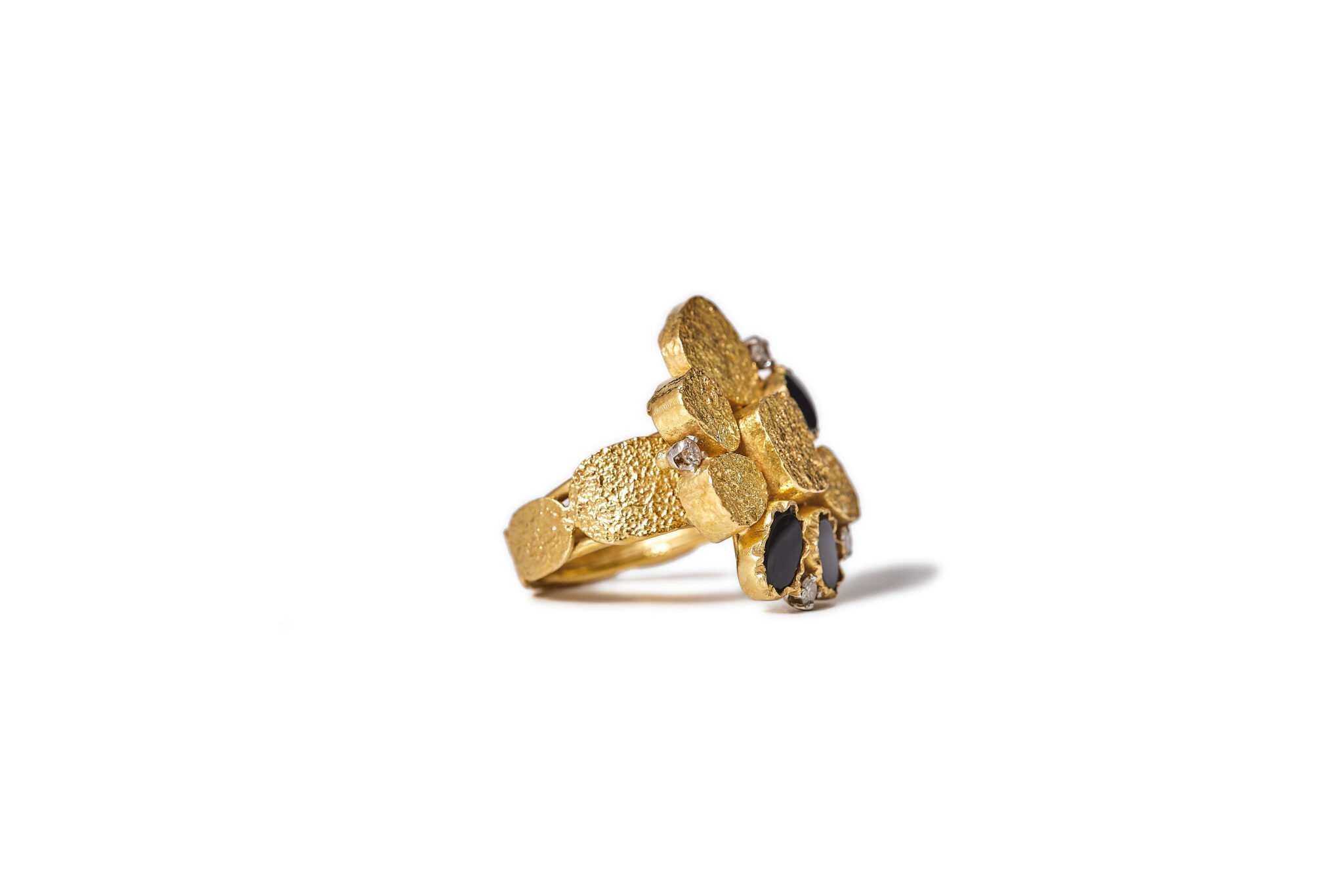
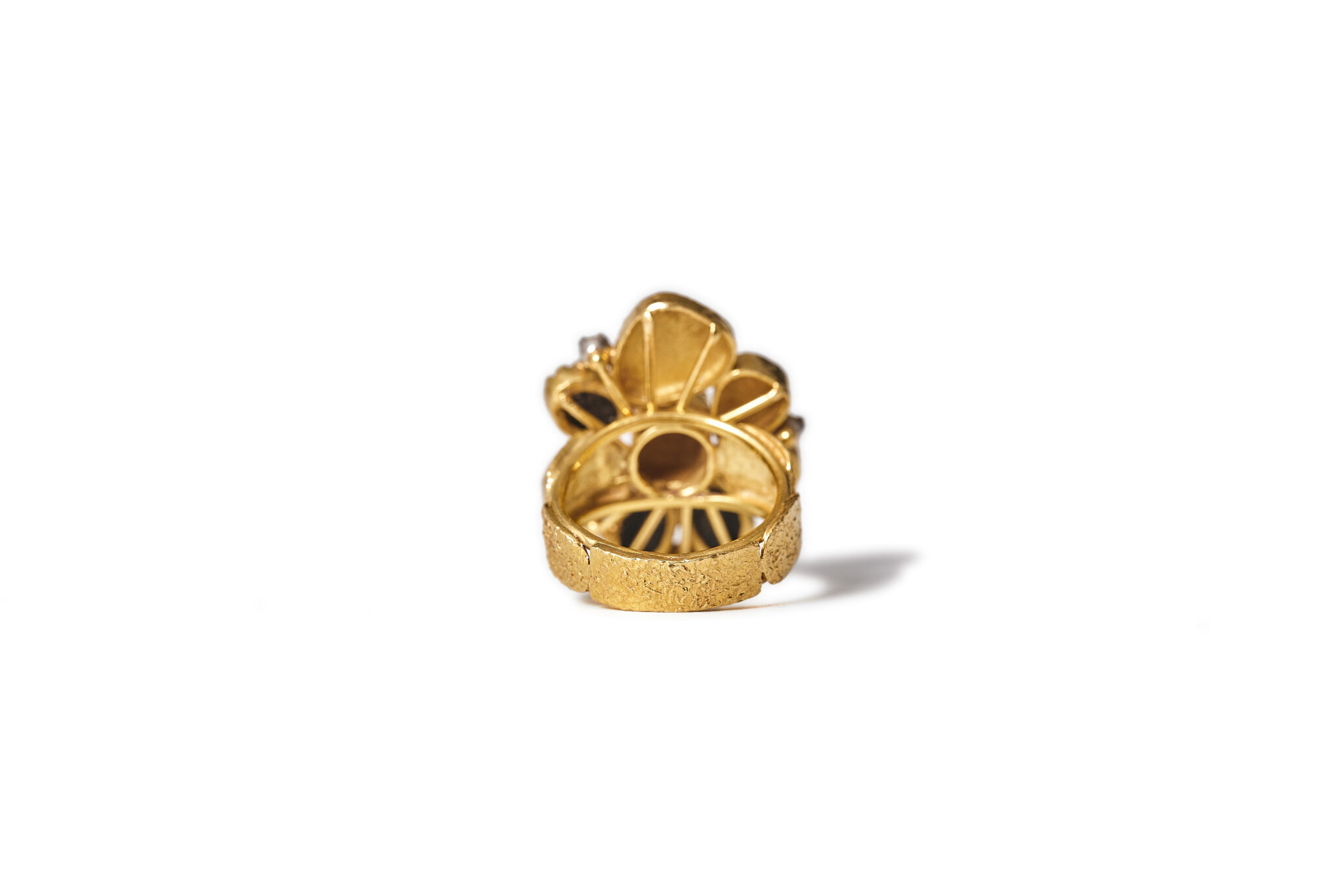
A ring with three polished discs of onyx and four brilliant-cut diamonds weighing a total of app. 0.16 ct. mounted in 18k textured gold and white gold. Unique, sculptural British jewelry modernism.
Diamond Color estimated: F-H. Clarity: VS-SI.
Ring size: us 6,5, 53, M½ , 17, 13.
Gross weight in total approximately: 12,9 grams.
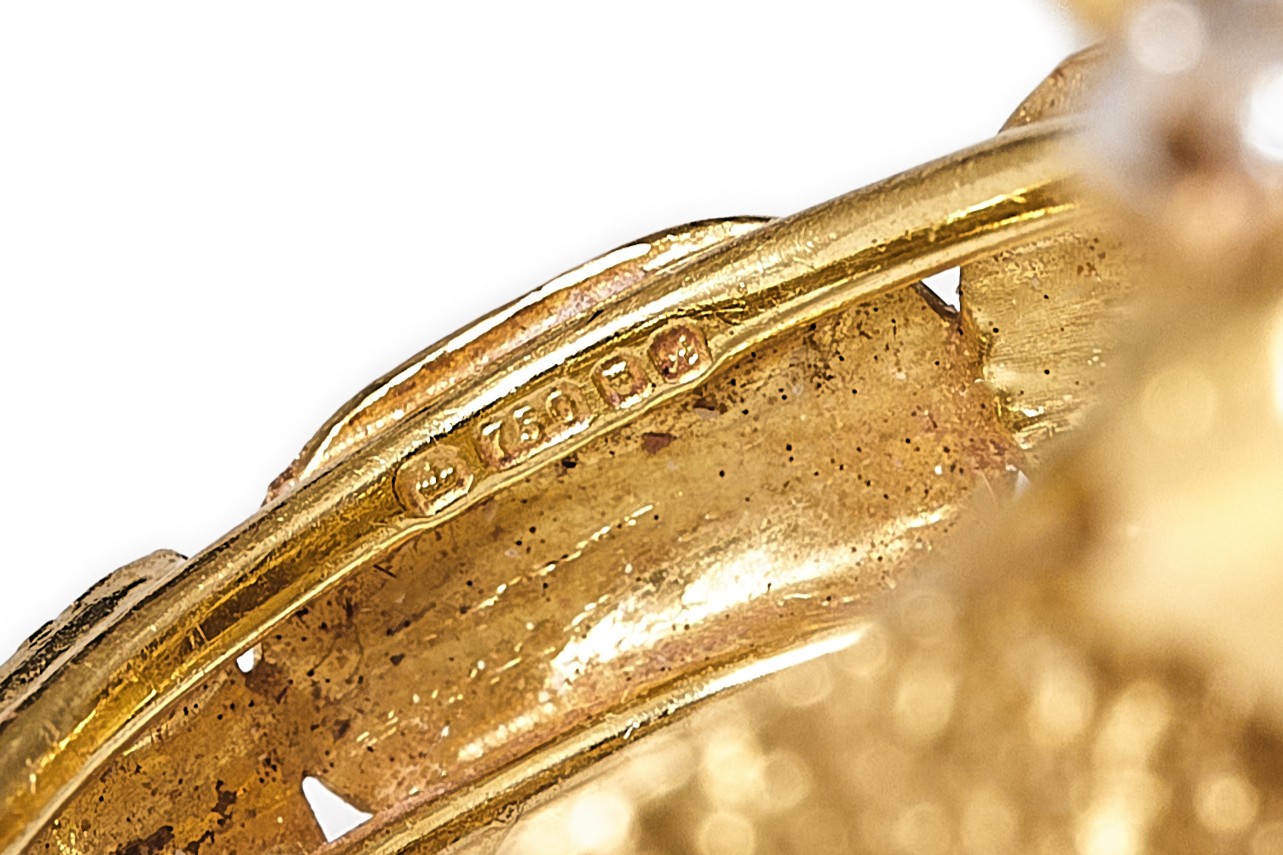
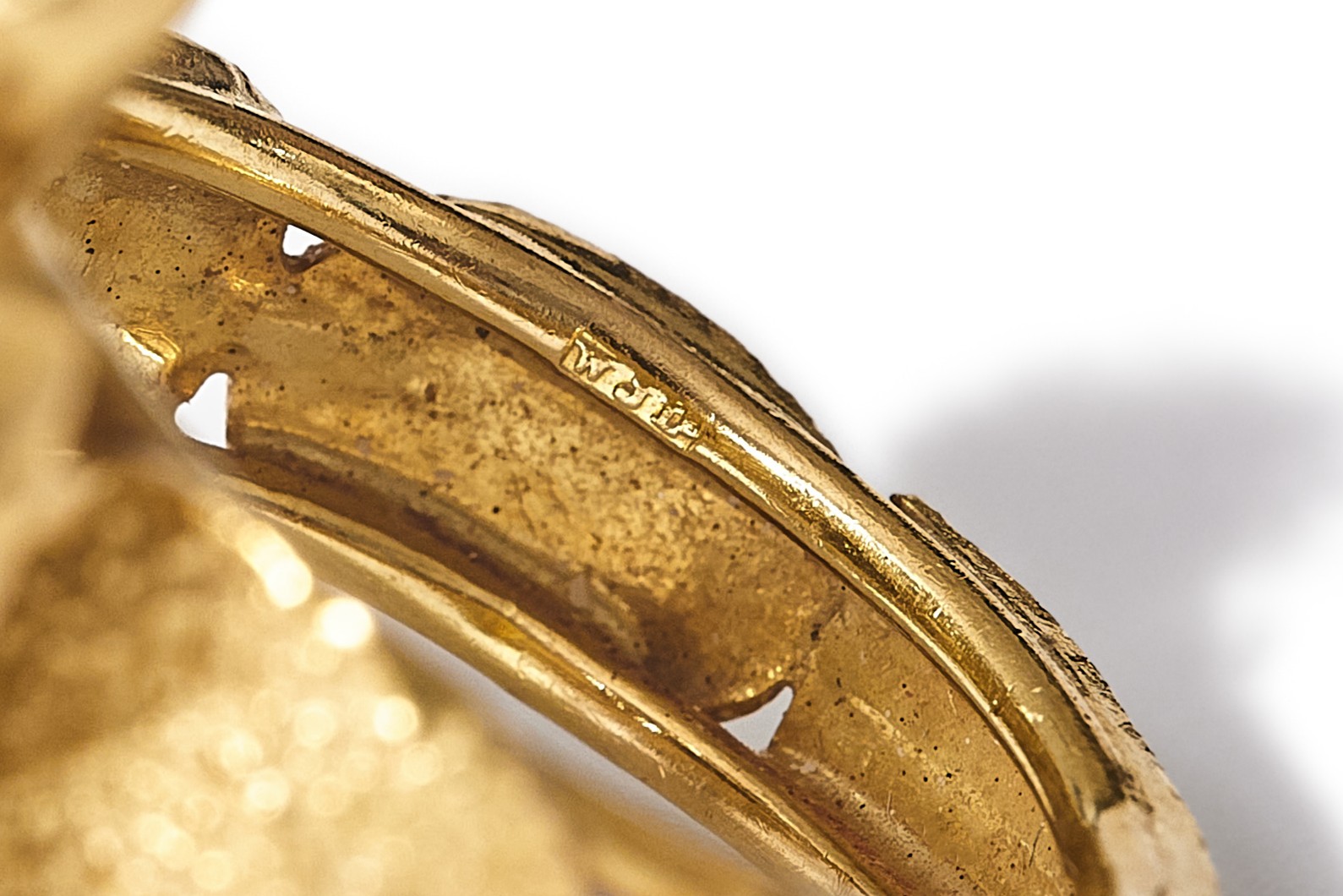
Ring fully hallmarked, London 1975, 750 and signed WJL – Weil Jewelry ltd
George Weil, born in Vienna, 1938, belongs to the generation of jewelers who shaped British Modernism in the 1960s and 70s. Born in Vienna, he fled with his Jewish family to Antwerp at the outbreak of the Second World War before later settling in London. He studied jewelry at St Martin’s School of Art and remarkably founded his Hatton Garden–based company, George Weil Jewelry Ltd, at just 18 years old.
Emerging within London’s vibrant postwar creative scene, Weil was part of a progressive movement that redefined jewelry as an artistic and sculptural discipline. A contemporary of Andrew Grima, he worked alongside a cohort of designers who drew inspiration from modern art, architecture, and design, rejecting traditional ornamentation in favor of bold experimentation. British Modernist jewelry of the 1960s and 70s embraced sculptural form, textured surfaces, and expressive asymmetry—qualities that sit at the core of Weil’s work.
His sculptural flair is evident across both his jewelry and his wider artistic output. Weil produced portrait busts of iconic figures including Winston Churchill, Sammy Davis Jr., and others, and this same sensitivity to form, proportion, and character translates into his jewelry designs. His pieces are modernist, abstract, and asymmetrical, often playing with scale, texture, and unconventional stone settings. Experimental in his use of gold, semi-precious and precious gemstones, Weil allowed metalwork to dominate, with gemstones acting as compositional elements rather than status symbols.
Weil’s bold, distinctive jewels attracted an exceptional clientele, including Elizabeth Taylor, Frank Sinatra, and Queen Elizabeth II. A master across multiple disciplines, he closed his jewelry studio in 1979 and later emigrated to Israel, where he continued to produce artworks. His jewelry is represented in the V&A museum in London.
Notably, Weil rarely submitted his pieces to the Assay Office in Hatton Garden, resulting in very few works bearing assay marks. Despite this, he worked almost exclusively in 18k yellow gold and platinum, and his jewelry is typically stamped “18CT” and “PLAT.”
Today, George Weil’s work stands as a confident expression of British Modernist jewelry, rooted in craftsmanship, sculptural thinking, and the radical creative spirit of postwar London.